Two days, two rooms of prayer, one through-line you can carry without a commentary. On Sunday 6 September 2026, from the window over St Peter's Square, Pope Leo XIV told pilgrims there is one debt that doesn't enslave: the debt of mutual love. On Monday evening, about thirty-five miles east of Rome, he stood in the Basilica Shrine of Our Lady of Good Counsel at Genazzano and asked Mary for aid to bring God's word to light through "courageous and wise decisions, decisions of authentic conversion."
You're reading this on Tuesday 8 September 2026 — the feast of the Nativity of Mary, the day the Genazzano Mass was keeping vigil for. The Vatican calendar had flagged that Monday evening Mass weeks earlier. The Sunday Angelus text is on the Vatican Press Office bulletin and in a full English rendering from OSV News. The Genazzano report is Courtney Mares for OSV News, filed the afternoon of the 7th. The Ukraine context OSV published the same morning is reporting around the Angelus appeal, not papal speech.
What he said on Sunday before the Angelus. What he said after it about Ukraine. What OSV's same-day context piece adds about the negotiation week — labelled as reporting, not papal words. What Monday's Genazzano visit looked like from Mares's account. What the homily did with Mary's birth and with a long quote from St Thomas of Villanova. Primary links at the end.
Sunday in the Square — XXIII Ordinary Time
Vatican bulletin B0698 records the setting in plain bureaucratic Italian: at noon on Sunday 6 September 2026, the Twenty-Third Sunday in Ordinary Time, Pope Leo XIV appeared at the study window of the Apostolic Palace and recited the Angelus with the faithful and pilgrims gathered in St Peter's Square. OSV News published the full English text of the address the same day.
He opened the way he often does. "Dear brothers and sisters, happy Sunday!" Then he went straight to the liturgy. The word of God that Sunday, he said, offered "some fundamental criteria for thought and action." From the Letter to the Romans: every commandment is "summed up in this word, 'Love your neighbor as yourself'" (Rom 13:9). Paul presses the point with an image that also sits inside the Lord's Prayer. "Owe no one anything, except to love one another" (v. 8).
That sentence is the hinge of the whole Sunday talk. Jesus taught people to ask for and to practise the forgiveness of debts. Yet, Leo said, there is one debt we owe one another that does not enslave us: the debt of mutual love. "All the attention, care and goodness we have received make us freer and more capable of responsibility."
That isn't a soft slogan. In the Roman letter, Paul's sorting what a Christian community still owes after the old ledger of ritual scorekeeping has been reframed. Leo's gloss keeps the paradox intact. Most debts bind. This one, he says, does the opposite. Received care doesn't leave you smaller. It leaves you freer, and more able to answer for what you do next.
If you've sat through a parish homily that turned "love your neighbour" into wallpaper, this is the opposite move. He names the debt, then refuses the prison metaphor that usually comes with debt language. Mutual love is owed. It does not enslave. That pairing is the Sunday headline before Ukraine and Genazzano come in.
Two ways to practise mutual love
The Sunday Gospel, he said, suggests at least two ways for every Christian community to practise that mutual love.
The first is to become capable of fraternal correction. Leo called it "a delicate art, too often forgotten," one that "calls for frankness and a gradual approach." The sequence is the one Matthew's Gospel already sketches for a community under strain: speak honestly, first face to face; then, if needed, with two or three others; finally, when required, with the whole community. Doing that, he said, "means facing reality and transforming problems and conflicts into opportunities for growth."
Then the blunt contrast. "Complaining and speaking ill of others are easier, but they accomplish nothing and leave many situations paralyzed. The Gospel, instead, teaches us the freedom that comes through charity."
If you work anywhere that runs on side-channels, that line lands hard. The easier path — complaint, talk behind a back — is named as paralysis, not harmless steam-letting. The harder path is frankness with a gradual ladder. Face to face first. Not a pile-on first. Not a group chat first. The art's delicate because frankness without a gradual approach turns into theatre, and a gradual approach without frankness turns into avoidance. Leo puts both requirements in one sentence.
The second way of loving one another as brothers and sisters, he said, is one that for Jesus "transforms even our prayer: coming to an agreement." Not only when there's a conflict. Also when asking God for some gift. He quoted Matthew 18:19: "If two of you agree on earth about anything you ask, it will be done for you by my Father in heaven."
The promise, in his reading, suggests that people can have "shared desires, shared sorrows and shared hopes," and that through prayer they can grow in unity. Without faith, "each person might feel alone and become suspicious of others, seeing them as strangers and enemies." By grace, "we are brothers and sisters who can live in harmony: meeting one another, forgiving one another and listening to one another in the Lord."
So under one debt you've got three named moves. Owe mutual love. Practise it by fraternal correction that's frank and gradual. Practise it by coming to agreement — including in shared prayer — so suspicion doesn't harden into the stranger-enemy frame. That's the catechesis before anyone mentions a capital city under fire.
Mary at the Visitation — the joyful debt
He closed the Angelus reflection with Mary. After the angel's announcement, she "went in haste to her cousin Elizabeth to share the joy and the hardship of pregnancy." Ask her, he said, "to teach us, too, the joyful debt of fraternal love."
The Visitation image does work the rest of the talk has prepared. Joy and hardship travel together. The visit isn't a courtesy call. It's shared pregnancy — shared weight — and Leo names both. The debt of fraternal love is joyful in that register, not in a greeting-card register. You go in haste. You share what's hard as well as what's bright.
That's the end of the catechetical half. What followed, after the Angelus prayer itself, shifted register without dropping the Sunday vocabulary of dialogue and agreement.
After the Angelus — Ukraine, in the pope's words
OSV's full text and the Vatican bulletin agree on the after-Angelus block. He began: "With a sorrowful heart, I have followed the news of the latest violent attacks that have recently struck several cities and civilian infrastructures in Ukraine, causing the deaths of innocent people." He continued: "My heart goes out to the suffering people, who for years have lived in anguish and fear."
Then the appeal, renewed: "I renew my appeal to put an end to the violence, to stop the destruction and to open hearts to dialogue and peace!" And the diplomatic hope, timed to "these days": "I hope that the efforts undertaken in these days to resume negotiations will bear concrete fruit and open space for diplomacy."
He asked for prayer "that concord may prevail in all the conflicts of the world."
Notice what he did and didn't do in that block. He named cities and civilian infrastructure. He named innocent deaths. He named anguish measured in years. He renewed an end-to-violence appeal. He tied hope to negotiation efforts "in these days" and asked for concrete fruit and diplomatic space. He widened the prayer to all the world's conflicts. He did not, in the published Angelus text, narrate the envoy itinerary. That itinerary sits in OSV's context reporting, which is next, and it stays labelled as such.
What OSV reported around the appeal — not papal speech
Junno Arocho Esteves, writing for OSV News on 7 September 2026, framed the Sunday appeal against a conflict "now in its fourth year" and against U.S.-led negotiation hopes. That framing is the correspondent's. Treat it as context, not as Leo's footnotes.
According to that OSV piece, Russia had stepped up attacks against Ukraine in a series of devastating strikes at the end of August and into September. A 1 September Associated Press report, as cited by OSV, said a Russian military bombing of Kyiv over a twelve-hour period killed over a dozen people. The attacks, AP said in that account, targeted civilian infrastructure and residential buildings. Ukrainian drone attacks over the summer, the same OSV summary notes, targeted Russian retailers and oil refineries.
Major Archbishop Sviatoslav Shevchuk of Kyiv-Halych, head of the Ukrainian Greek Catholic Church, spoke in a video message published 6 September. OSV quotes him saying attacks that deliberately target civilians "at the most vulnerable moments of their lives" were "state terrorism." "The worst thing," he said, "is that the enemy is using modern means, including unmanned systems, to attack residential areas at night," and that during the day — especially after 1 September, when the academic year began in Ukraine — Russia "deliberately attacks schools, universities, and dormitories."
Those are Shevchuk's words in OSV's rendering, dated to the same Sunday as the Angelus. They sit beside Leo's sorrowful-heart appeal as parallel public speech from a church leader in Kyiv, not as lines the pope recited from the window.
On the negotiation track, OSV reported that both countries temporarily halted strikes with the arrival of U.S. envoys Jared Kushner and Steve Witkoff in Moscow on 5 September for talks with Russian President Vladimir Putin, and the following day with Ukrainian President Volodymyr Zelenskyy in Kyiv. Talks with Putin were described as "constructive," OSV said, but there was "no concrete sign that either country was back on the negotiating table." At a 6 September press conference, Zelenskyy said he was seeking security guarantees from the United States to prepare defenses for the coming winter months, AP reported via OSV.
Put that next to Leo's sentence about "efforts undertaken in these days" and you can see why OSV filed the context piece. The pope named the hope for concrete fruit. The correspondents named the envoys, the cities, the constructive-but-not-yet-at-table assessment, and Zelenskyy's winter-guarantee ask. Different speakers. Same news week.
OSV's photo caption on a related archive image notes that Shevchuk had a personal audience with Leo on 12 February 2026 at the Apostolic Palace and briefed him on the situation in Ukraine as the full-scale invasion reached the four-year mark. Useful only as chronology of contact. It doesn't rewrite Sunday's Angelus text.
Greetings, then ordinary life after summer
After the Ukraine appeal, Leo welcomed Romans and pilgrims from various countries. He greeted, in particular, the community of the Interdiocesan Seminary Studienhaus Sankt Lambert of Lantershofen in Germany; the pilgrimage of the Parish of Sant'Ulderico Vescovo in Musestre (Treviso); and the Diocesan Choir of the Diocese of Oppido Mamertina-Palmi, accompanied by the Bishop.
Then a pastoral closing that sounds small until you notice the calendar. "As we gradually resume our ordinary activities after the summer break, let us ask the Lord to accompany us and sustain us with his light." Happy Sunday. The Square empties. The week continues.
Ordinary activities after summer isn't a throwaway line on a weekend when negotiation envoys are moving between Moscow and Kyiv and a Marian vigil Mass is already on the papal household calendar for Monday evening. It's the register Leo often keeps: public appeal, then the return to work, study, choir rehearsal, parish bus home. The debt of mutual love is for those rooms too.
Monday evening — Genazzano on the calendar
On 8 August 2026, the Prefecture of the Papal Household had already published the notice in English: on Monday 7 September, at 18:00, the Holy Father Leo XIV would celebrate Holy Mass in the Shrine of Our Lady of Good Counsel in Genazzano, on the eve of the Feast of the Nativity of the Blessed Virgin Mary. That's the calendar spine. Mares's OSV report is the day-of flesh on that bone.
Genazzano is a small town about thirty-five miles east of Rome. The shrine has been entrusted to the Augustinians since the 14th century. It has drawn pilgrims for centuries, among them several popes — Urban VIII, Pius IX, John XXIII, John Paul II — who are depicted in frescoes on the basilica walls. Monday's visit was Leo's second to the basilica as pope. His first, Mares notes, was a surprise visit just days after his election in the May 2025 conclave, to pray before the image of the Virgin Mary to whom he has long been devoted.
The Augustinian Province of Chicago, where then-Robert Prevost entered religious life, was dedicated to Our Lady of Good Counsel. He has visited the Genazzano sanctuary for decades since a first visit while studying in Rome in the early 1980s. The pilgrimages continued through his years as prior general of the Augustinians, as bishop of Chiclayo in Peru, and later as a cardinal. That biography is why the Monday trip isn't a random Marian stop. It's a return.
Arrival, silent prayer, a golden rose, a new fresco
Mares's timeline for the evening is concrete. Leo arrived in Genazzano shortly after 5 p.m. He greeted pilgrims gathered outside and inside the basilica who kissed his ring. He first knelt in prayer before the main altar, then visited the chapel containing the revered image of Our Lady of Good Counsel, where he prayed silently and presented a golden rose — a traditional papal gift.
Before Mass, a new fresco on the wall of the basilica was unveiled depicting the current Augustinian pope kneeling before the Marian image, alongside the older frescoes of Urban VIII, Pius IX, John XXIII, and John Paul II. The shrine's wall now carries that continuity in paint.
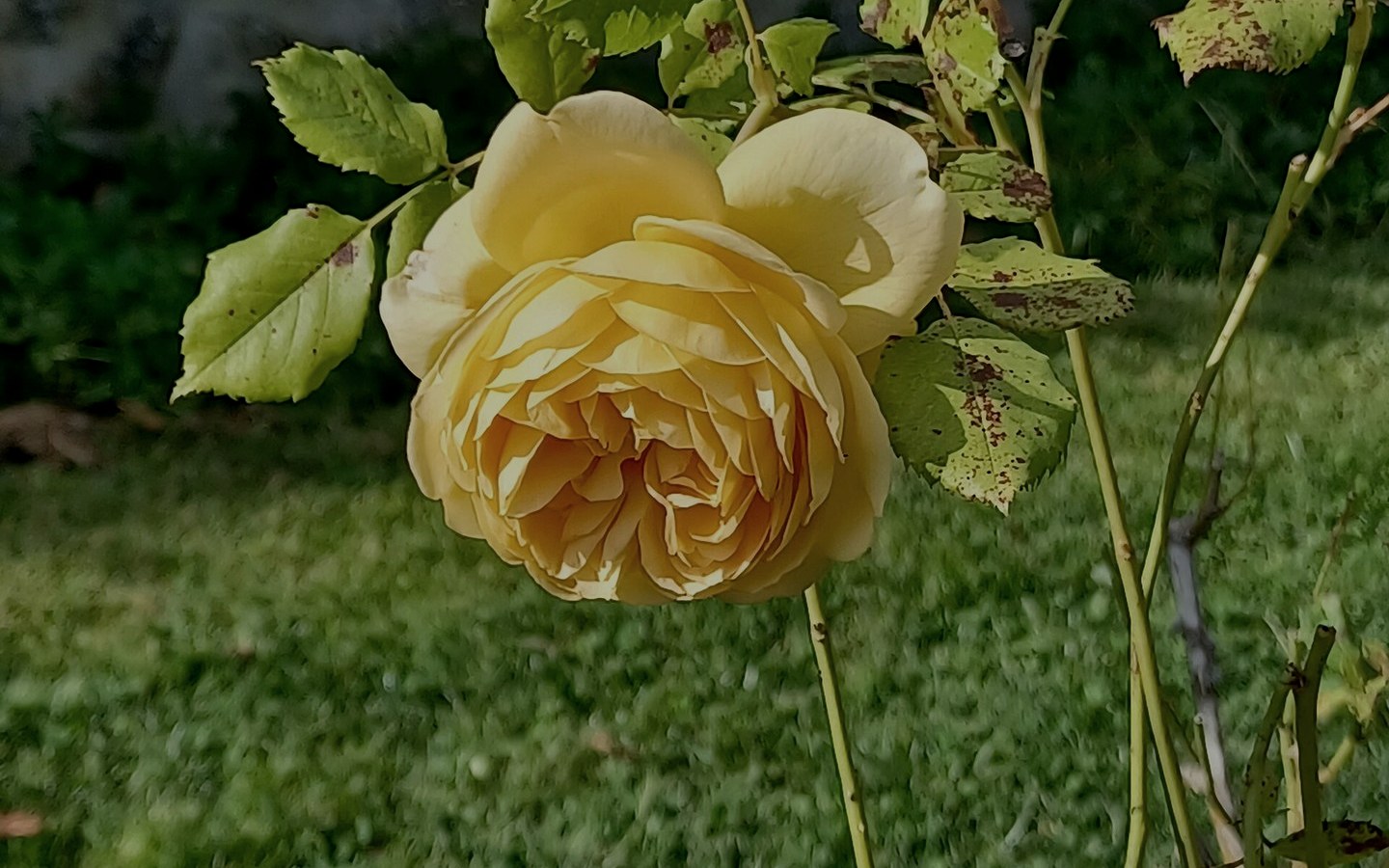
A golden rose is old papal gift language. It's metal and ceremony, not garden botany, but the symbol is still a rose offered to a Marian image. On a vigil of Mary's birth, the gift and the feast share a register even before the homily starts.
The guest-book line that opened the homily
At the start of the homily, Leo quoted words he had written in the shrine's guest book on that first visit after the conclave. Mares carries the line with his framing: "As you may remember, 'in the early days of my pontificate, I felt the duty and a deep desire to visit Genazzano, the Shrine of Our Lady of Good Counsel, who has accompanied me throughout my life with her maternal presence, her wisdom and the example of her love for her Son, who is always the center of my faith.'"
Duty and deep desire in one breath. Maternal presence, wisdom, example of love for her Son. The Son named as the centre of his faith. That's how he located himself in the shrine before he turned to the feast.
"Mary is the dawn of a new day"
Reflecting on the birth of the Virgin Mary — which the Church celebrates on 8 September — Leo said: "Mary is the dawn of a new day, of our world finally freed from evil."
Then the ask that became OSV's headline. "Let us ask her for her Good Counsel, so that we may welcome the divine Word, keep it within us, and bring it to light through courageous and wise decisions, decisions of authentic conversion."
Three verbs before the decisions: welcome the Word, keep it, bring it to light. The decisions are the bringing-to-light. They're to be courageous and wise. They're to be decisions of authentic conversion. In a week when Sunday's Angelus had already spoken about agreement, dialogue, and the paralysis of complaint, Monday's counsel-language sits in the same moral weather without the pope needing to cross-reference himself. Welcome. Keep. Bring to light. Decide.
"She is born simply a child"
On Mary's birth itself, Mares quotes him: "We celebrate the birth of a little girl called to become the Mother of her Creator, the Mother of God who saves. And yet, she is born simply a child, like the daughters and granddaughters we hold in our arms."
The paradox is old Christian language — Mother of her Creator — and Leo refuses to let it float free of a body you can hold. A little girl. Like the daughters and granddaughters in the room. The feast is cosmic and domestic in the same two sentences.
St Thomas of Villanova — imagination under destruction
He turned to St Thomas of Villanova, a sixteenth-century Augustinian bishop and theologian, who pondered why the Gospels did not provide more details about Mary's life and treated that silence as an invitation to contemplate her holiness and virtues.
Leo's comment, per Mares: "St. Thomas invites us to engage in this wonderful exercise of the imagination," and contemplative prayer is especially important today "in times of destruction and uncertainty."
Then the long Thomas quote, kept verbatim from OSV:
"Let your imagination run wild … paint in the depths of your soul a young woman who is most pure, most prudent, most beautiful, most devout, most humble, most gentle, full of every grace, rich in sanctity, adorned with all the virtues, embellished with all the charisms, absolutely pleasing to God."
That isn't a call to invent history. In Thomas's frame, as Leo used it, Gospel silence about Mary's private life becomes permission for contemplative imagination — painting virtues in the soul — precisely when the public world is loud with destruction and uncertainty. Sunday named violent attacks and innocent deaths. Monday named destruction and uncertainty as the climate in which that contemplative exercise matters. Nobody's claiming Leo wrote the two days as a diptych. The calendar put them back to back. The published words share weather.
How the two days sit together
If you only take one object from Sunday, take the debt that does not enslave. Mutual love, owed, freeing, practised as fraternal correction and as coming to agreement. If you only take one object from Monday, take Good Counsel aimed at courageous and wise decisions of authentic conversion — welcome the Word, keep it, bring it to light.
Correction without charity becomes a weapon. Agreement without frankness becomes a false peace. Counsel without conversion becomes branding. Leo's Sunday language blocks the first two failures. His Monday language blocks the third. You can hold all three warnings without needing a secret Vatican plot summary.
The Ukraine appeal sits between them on the clock. Sorrowful heart. End the violence. Stop the destruction. Open hearts to dialogue and peace. Hope that negotiation efforts "in these days" bear concrete fruit. OSV's context piece tells you which envoys moved on 5 and 6 September, what "constructive" did and didn't mean, what Shevchuk called state terrorism on the same Sunday, what AP reported about the Kyiv bombing and about Zelenskyy's winter security-guarantee ask. The pope's verbs were end, stop, open, hope, pray. The correspondents filled the proper names.
Genazzano adds biography and sacramentals. Second visit as pope. First visit days after May 2025 election. Guest-book duty and desire. Kneeling at the main altar. Silent prayer at the image. Golden rose. New fresco beside older papal frescoes. Homily on a little girl who becomes Mother of her Creator. Thomas of Villanova on painting holiness in the soul when the Gospels stay quiet and the age stays loud.
What isn't in Leo's mouth: Kushner, Witkoff, Putin, or Zelenskyy. OSV did that attribution work, and it stays theirs. Casualty figures stay at AP-via-OSV's "over a dozen" for the 1 September Kyiv bombing account. Negotiation outcome stays where OSV left it — no concrete sign both parties were back at the table. Thomas of Villanova stays a contemplative exercise about Mary's virtues, not a foreign-policy memo. Leo's gloss already ties that exercise to times of destruction and uncertainty. That's enough load for one Augustinian sentence.
The household calendar published Genazzano on 8 August. The Angelus landed on the XXIII Sunday in Ordinary Time because that's where the lectionary sat. Coincidence of pastoral themes is allowed to be coincidence until a primary source says otherwise.
Tuesday morning
The Angelus text is fixed in the bulletin and in OSV's full English page. The Genazzano Mass is reported by Mares with guest-book quotation, homily lines, and ritual detail. The Ukraine negotiation week is still moving — OSV's 7 September account is the snapshot here, including the "no concrete sign" clause about a return to the table. Shevchuk's Sunday video stands as his charge against attacks on civilians and schools. Leo's Sunday hope was for concrete fruit and diplomatic space. Concrete fruit is measured in outcomes that post-date a morning paper.
The portable teaching is still the debt language. Owe mutual love. Don't confuse that debt with a chain. Practise it face to face before you practise it in a crowd. Practise agreement in prayer before suspicion finishes its work. Ask for counsel that can welcome the Word, keep it, and bring it to light in decisions that are courageous, wise, and converting. Hold a golden rose and a sorrowful heart in the same week without forcing them to explain each other.
On Sunday he also greeted Lantershofen's Interdiocesan Seminary Studienhaus Sankt Lambert; Musestre's Parish of Sant'Ulderico Vescovo; Oppido Mamertina-Palmi's diocesan choir with their bishop; and blessed ordinary activities after summer. That's the human periphery of the Square before the cars leave.
Primary sources
Vatican Press Office bulletin B0698, Angelus of 6 September 2026 (Italian original): https://press.vatican.va/content/salastampa/it/bollettino/pubblico/2026/09/06/0698/01299.html.
OSV News, full English text of Pope Leo XIV's Angelus address, 6 September 2026: https://www.osvnews.com/full-text-pope-leo-xivs-angelus-address-given-sept-6-2026/.
Prefecture of the Papal Household notice, 8 August 2026 — Genazzano Mass set for 7 September at 18:00: https://press.vatican.va/content/salastampa/en/bollettino/pubblico/2026/08/08/260808d.html.
Courtney Mares, OSV News, "Pope Leo XIV asks Our Lady of Good Counsel for aid to make 'courageous and wise decisions,'" 7 September 2026, 3:27 p.m.: https://www.osvnews.com/pope-leo-xiv-asks-our-lady-of-good-counsel-for-aid-to-make-courageous-and-wise-decisions/.
Junno Arocho Esteves, OSV News, "Pope Leo expresses hope Ukraine, Russia negotiations bear fruit," 7 September 2026 (context reporting; AP citations; Shevchuk 6 September video): https://www.osvnews.com/pope-leo-expresses-hope-ukraine-russia-negotiations-bear-fruit/.
The paper
Comments
No notes on this story yet.
Sign in to comment