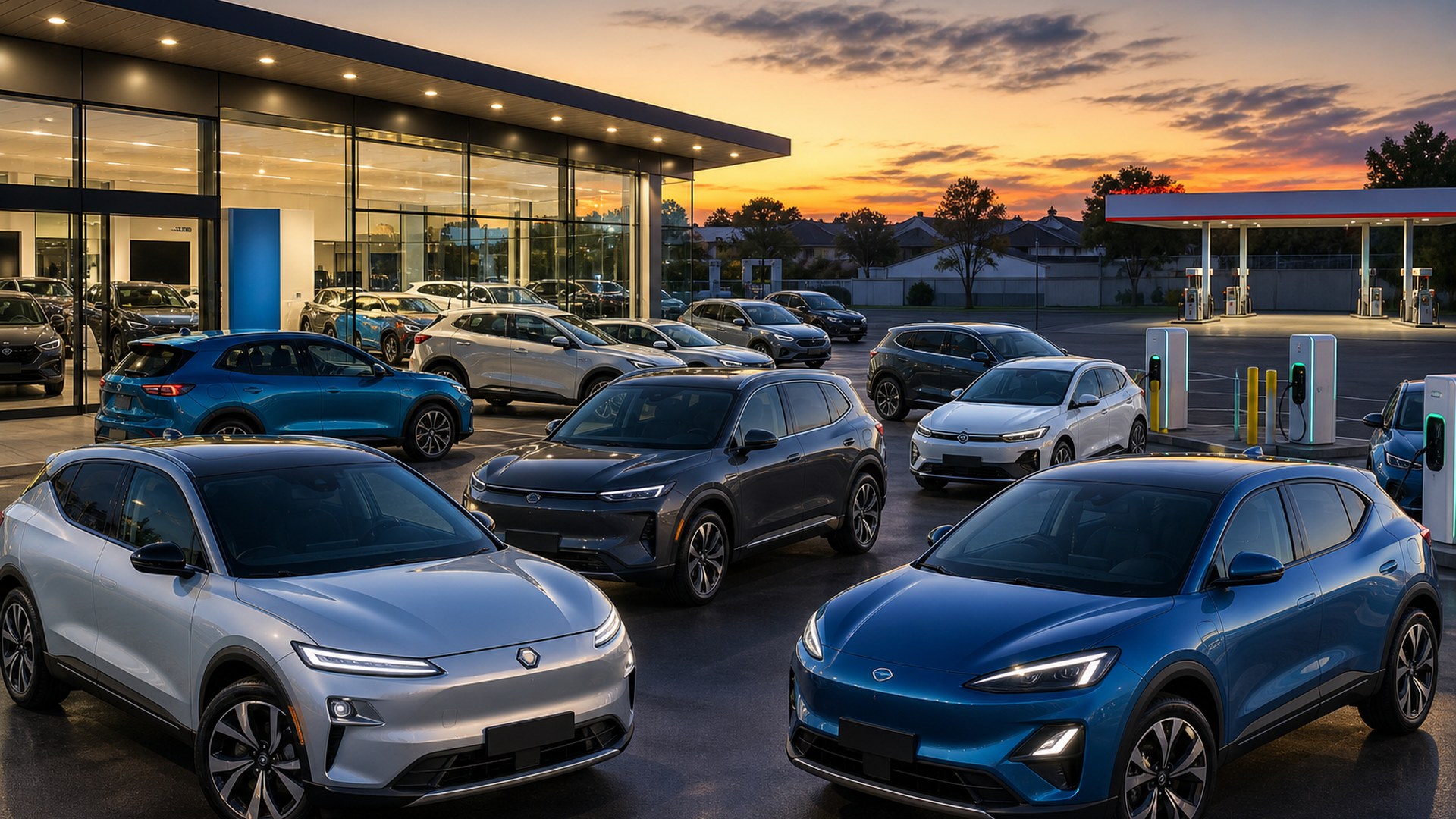

Battery-electric vehicles outsold petrol cars in Australia in August 2026 for the first time on the VFACTS record the Electric Vehicle Council is citing — 27,078 BEVs, 24.9 percent of every new vehicle sold that month.
Electrified powertrains as a group cleared more than half the new-car market in the same month's coverage, and BYD, Tesla, and a run of Chinese brands did the heavy lifting while Toyota still led the overall brand table.
Read the month the way the industry reads it. VFACTS, via the Electric Vehicle Council's August 2026 brief, puts battery-electric volume at 27,078 units — almost one in four new vehicles. Petrol, on that same telling, finished behind BEV for the first time in a calendar month. Hybrids and plug-ins sit inside the broader electrified bucket that coverage says cleared more than half the market. You're not looking at a niche chart anymore. You're looking at the main sales sheet.
Brand order still matters, and Toyota is still first. Toyota moved 19,712 vehicles in August, down about five percent year on year. BYD landed second with 8,231 sales, up roughly 68 percent year on year. Tesla followed with 7,685, up about 160 percent. Those three names — one legacy hybrid heavyweight and two battery specialists — frame the month. The second-place badge on a Chinese BEV maker is the structural shift Paul Ellis, BYD's local voice in the coverage, summarised in one line: "The pendulum has swung – the shift is now absolute."
Model detail sharpens the picture. BYD's Sealion 7 alone accounted for 2,213 sales and ranked sixth among all vehicles in the month, not sixth among EVs — sixth among everything. That is a midsize electric SUV sitting in the same conversation as the country's volume petrol and hybrid staples. Seven of the eight top-selling EVs in the period were Chinese brands, with BYD, Geely, Zeekr, and Chery's Jaecoo line among the names on the list. The mix is no longer a Tesla-only story with everyone else as a footnote.
Energy Minister Chris Bowen called August a "landmark moment" in the same news cycle. NRMA's Peter Khoury told reporters the jump is not a flash in the pan and framed 2026 as a tipping-point year for electrified uptake. Those are their lines, attributed. Put them next to the VFACTS percentages and you get the official and industry read of the same spreadsheet.
Charging is the lagging indicator everyone keeps naming. New South Wales is reported with about 515 fast-charging sites. Victoria sits around 396. Those are network counts, not lane counts, and they already feel thin when you stack them against the sales curve. Coverage attributed to Akhtar warns of more than 30,000 additional EVs on Victorian roads by Christmas if the present pace holds. That is a Christmas 2026 capacity problem stated in public, not a private lobby note. Sales can clear petrol while the plug map is still catching up — and that tension is part of the August story.
Oil context sat in the same week's papers. The Sydney Morning Herald's 5 September 2026 filing noted US–Iran war pressure cutting into oil supplies as backdrop while Australian buyers were already voting with battery orders. You do not need a forecast model to see why a month where BEV beats petrol lands differently when crude headlines are noisy. The sales sheet is local. The oil stress is global. Both showed up in the same reporting window.
DriveTech and smartcarz filed on 4 September 2026 with the same core arithmetic the council brief carries: BEV share near a quarter, electrified share above half, BYD's brand climb, Tesla's percentage surge, Sealion 7's sixth-place finish. SMH's 5 September piece put Bowen's landmark line and the oil backdrop in the same frame. Those filings are the peg. I'm not inventing a dealer floor walk or a buyer diary.
Australia just printed a month where the battery-electric column beat the petrol column on new-vehicle sales. Chinese brands, led by BYD's volume and Sealion 7's model rank, sat in the top of the overall table, not only the EV sub-table. Tesla's year-on-year jump shows the established BEV channel is still expanding hard. Toyota remains the volume leader even while its August tally dipped year on year — hybrids still matter inside the electrified majority. Transition with receipts.
What August does not settle is infrastructure parity. Five hundred and fifteen NSW fast sites and three hundred and ninety-six Victorian ones are countable assets. Thirty thousand-plus extra EVs on Victorian roads by Christmas, if Akhtar's warning holds, is a countable demand spike. The sales tipping point arrived before the charger map looked finished. Policy and network operators now have a public month on the board that says demand is real.
The countable lines again, because they are the story: 27,078 BEVs; 24.9 percent share; 8,231 BYD sales; 19,712 Toyotas; 7,685 Teslas; 2,213 Sealion 7s; about 515 NSW fast-charging sites; about 396 in Victoria; more than 30,000 additional Victorian EVs flagged by Christmas. Keep those next to the quotes from Ellis, Bowen, and Khoury.
Dealers will feel August in the order books before the charger map catches the same headline. A month where BEVs take roughly a quarter of all new vehicles, and electrified powertrains clear half, changes what sits on the forecourt and what finance desks quote. BYD's climb to second brand place on 8,231 sales is the clearest proof that the volume fight is no longer a two-horse petrol-hybrid story with a Tesla side plot.
Keep the Chinese-brand concentration in view without turning it into a panic line. Seven of eight top EVs from Chinese marques means supply chains, software update cadence, and parts networks now matter as much as the WLTP sticker. Sealion 7's sixth-place finish among all vehicles is the model-level proof point inside that brand shift. Geely, Zeekr, and Chery Jaecoo showing inside the top EV set widens the shelf beyond a single hero nameplate.
August 2026: BEVs outsold petrol cars in Australia for the first time on the VFACTS/EVC telling — 27,078 units, 24.9 percent of the new-vehicle market — while electrified powertrains as a class cleared more than half. BYD took second brand place on 8,231 sales; Tesla jumped to 7,685; Sealion 7 finished sixth overall on 2,213. Seven of eight top EVs were Chinese-branded. Ellis said the pendulum is absolute. Bowen called it landmark. Khoury called 2026 a tipping point. Charging sites still lag the sales curve. SMH, 5 September; DriveTech/smartcarz, 4 September. That is the reported month. The petrol column lost on the sheet.
The paper
Comments
No notes on this story yet.
Sign in to comment