
The tape object is on the roof. Starlink V5, factory-integrated into Tesla's Cybercab — not bolted on, not optional, built in. BaseNor's 3 September 2026 filing says both the official Starlink account and Elon Musk confirmed that overnight. I'm citing BaseNor carefully as a secondary that names the primary posts, and I'm putting Starlink's own V5 hardware sheet beside it for the kilograms and the millimetres. This is a video file: posts and photos as the object you can open, not a second robotaxi policy essay.
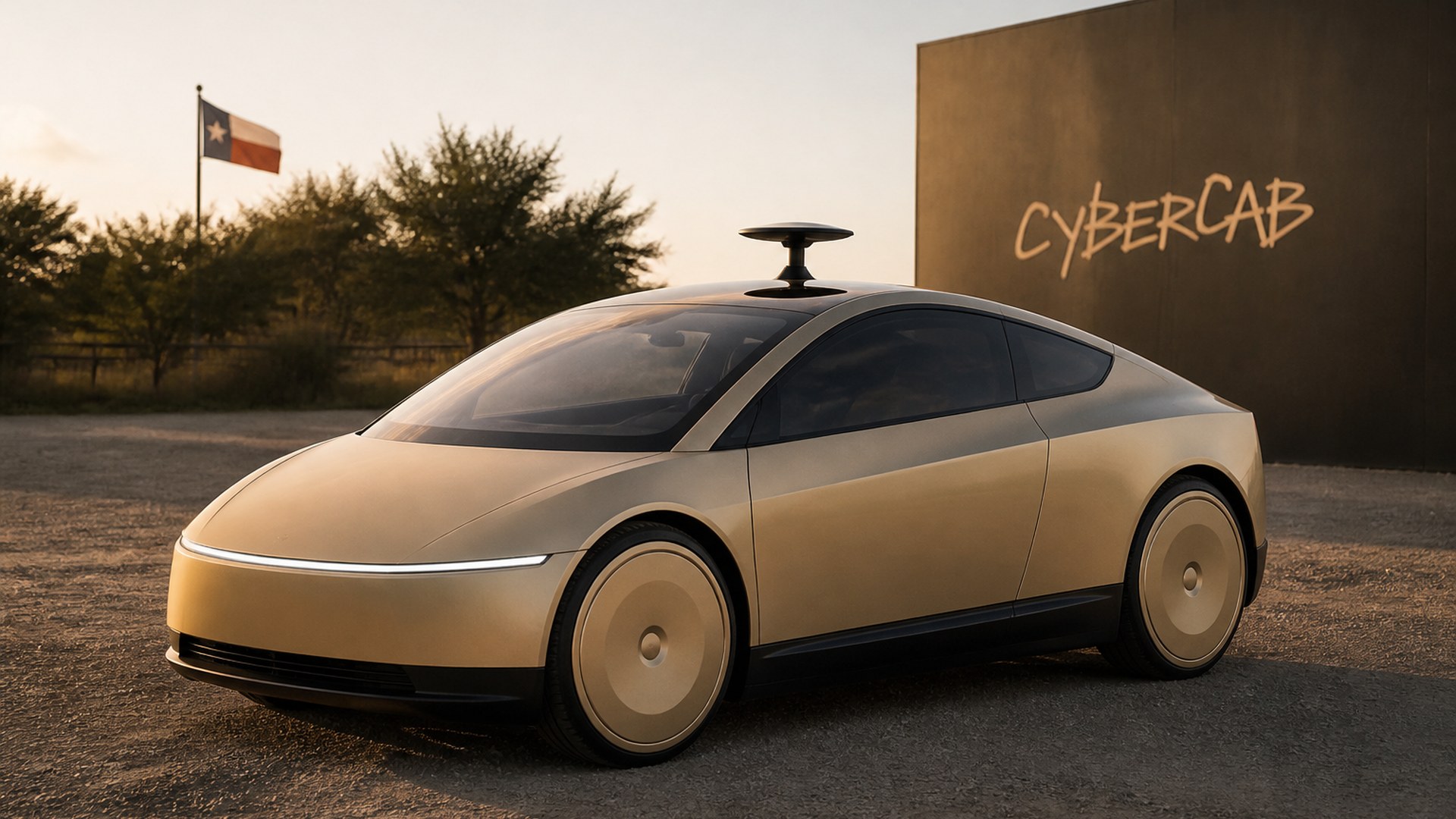
What the confirmation says, on BaseNor's reading. The V5 terminal sits flush in the Cybercab's rear roof panel. Earlier prototypes carried externally mounted dishes. August hardware already showed the integrated look on a gold prototype outside Gigafactory Texas in the wider press. Factory integration means the antenna is part of the designed structure. For a robotaxi that has to look clean at fleet scale, that distinction is the whole picture.
Primary pointers BaseNor lists: @Starlink on X at 2026-09-04T00:19:02Z, and @elonmusk on X at 2026-09-04T00:24:16Z. Those timestamps are overnight into 4 September UTC — which is why a 3 September U.S. blog can call it "overnight." I couldn't open the X objects live when I checked, so the citation stays: BaseNor naming those posts as the direct sources. If the posts are still served, they are the tape. If they've folded, BaseNor's summary and the August prototype photos remain the public trail.
Hardware you can measure without a press badge. Starlink's own Help Center comparison of V4 and V5 — and the public V5 specification sheet — puts the residential dish at 384 mm by 306 mm by 34 mm, dish weight 1.1 kg, average power 35–50 W, peak download capability 375+ Mbps. Against V4 that's roughly half the mass and about half the average watts. Tom's Hardware and The Verge filed the same sheet in July when V5 hit select areas. Those numbers are SpaceX's published kit, not a teardown of the Cybercab roof module. The automotive install may differ in mount and motion firmware. The mass and envelope are why a roof panel can swallow the thing.
Motion caveat, printed on Starlink's own page: Starlink V5 is not intended for in-motion use in the residential kit. That sentence matters. Cybercab needs connectivity while rolling. Wider reporting in August described an automotive-oriented V5 path — including GNSS-aided tracking talk in secondary coverage — and Tesla VP of AI Software Ashok Elluswamy has said Starlink is not part of the autonomous driving safety stack. Fleet management, remote customer service, navigation updates, passenger entertainment: those are the stated jobs. The car is supposed to drive without the satellite link. The roof radio is redundancy and service, not the brakes.
What the cameras and stills have already shown. August prototype photos: low-profile dish flush in the rear roof, gold paint on at least one Gigafactory Texas reveal car, robotaxi account imagery in the Hypebeast and eWeek trails. July earnings-call colour from Musk, in eWeek's August file: satellite coverage as a hedge against cellular dead zones as the service expands; passenger broadband pitched for sports, movies, gaming, work. July 20 disclosure in that same trail already put a V5 terminal beside GPS and 5G/LTE in Cybercab diagrams. The September confirmation is the factory-integration stamp on that earlier hardware tease.
Austin week context, kept short so this stays a tape file. Limited public Cybercab rides and an invitation-only launch event sat on 3 September 2026 in the BaseNor "inside the Cybercab" follow-up. Starlink on the roof is one of the concrete hardware sentences from that week. NHTSA audit noise around certification is another story. Here the object is the antenna and the posts that said it's built in.
How to watch the object on Sunday. Open the Starlink and Musk X posts if they still resolve at the timestamps BaseNor printed. Open Starlink's V5 vs V4 Help Center article for the spec table. Open the public specification PDF for the millimetre drawing. Open the August prototype stills that show the flush rear-roof install. That set is the tape: confirmation posts, hardware sheet, roof photos. You don't need a trailer cut. You need the identifiers and the picture of steel and phased array in the panel.
Metric notebook. Dish mass: 1.1 kg. Envelope: about 306 × 384 × 34 mm on the Starlink sheet. Average power: 35–50 W. Peak download capability on the sheet: 375+ Mbps. Mount story per BaseNor: flush rear roof, factory-integrated. Confirmation trail: BaseNor 3 Sep 2026 citing @Starlink and @elonmusk overnight posts timed 4 Sep 00:19 and 00:24 UTC. Safety stack: not required for autonomy, per Elluswamy in prior reporting. Residential V5: not intended for in-motion use per Starlink — treat automotive Cybercab hardware as a related but separate install until SpaceX publishes a vehicle sheet.
Cite carefully, because accessory blogs are not the agency. BaseNor sells Tesla fitment gear; it also dated and sourced the confirmation posts. Starlink.com carries the kilograms. Musk and Starlink accounts are the named primaries. August photos are the visual tape. I'm not upgrading a blog paraphrase into a regulatory filing. I'm telling you which public objects a household can open on a Sunday afternoon when the roof is the news.
August was already a photo story. Hypebeast and eWeek traced the gold prototype outside Gigafactory Texas with the dish in the rear roof, moving from July renders to metal you could see. Elluswamy's clarification sat in those files: satellite for fleet and service layers, not for the autonomy computer's safety case. Musk's earnings-call line about dead zones and unreachable robotaxis is why the roof radio exists as a product sentence. The September confirmation from Starlink and Musk, via BaseNor's timestamped pointers, is the factory stamp. Prototype photos plus confirmation posts equal a tape a household can open without a badge.
A few lines I won't cross. I will not invent an X status ID I didn't fetch. I will not pretend BaseNor is Starlink.com. I will not collapse residential V5's "not for in-motion use" footnote into a claim that Cybercab's roof module is identical silicon with identical firmware. I will put the published millimetres and watts on the table, name the secondary that cited the overnight posts, and point you at the stills of the flush panel. That is enough for a Sunday video file. The rest is engineering Tesla and SpaceX still owe a public vehicle sheet for.
So here's the video file. Cybercab Starlink on the roof. Factory-integrated V5. 1.1 kg. About 306 by 384 millimetres. 35 to 50 watts average on the published residential sheet. Posts from Starlink and Musk on the BaseNor timestamp trail. Flush rear panel in the prototype stills. Not the autonomy brain. The radio in the roof. Play the posts. Measure the sheet. Look at the panel. That's the tape.
The paper
Comments
No notes on this story yet.
Sign in to comment