
One Nation’s Victorian campaign site puts two highways on the list before it names a power station. Princes and Bass. That’s the news from the highway priorities.
Upgrades to the Princes Highway and the Bass Highway sit as printed priorities on onenation.org.au’s Vote One Nation, Victoria page, alongside the massive backlog in regional road maintenance. The same page pushes a second interconnector across Bass Strait, expanded fuel storage at Geelong, and a scrap of the over-budget Metro Link. The Victorian election is November 2026 — Saturday 28 November on Parliament of Victoria’s calendar. I'm putting the road nouns first.
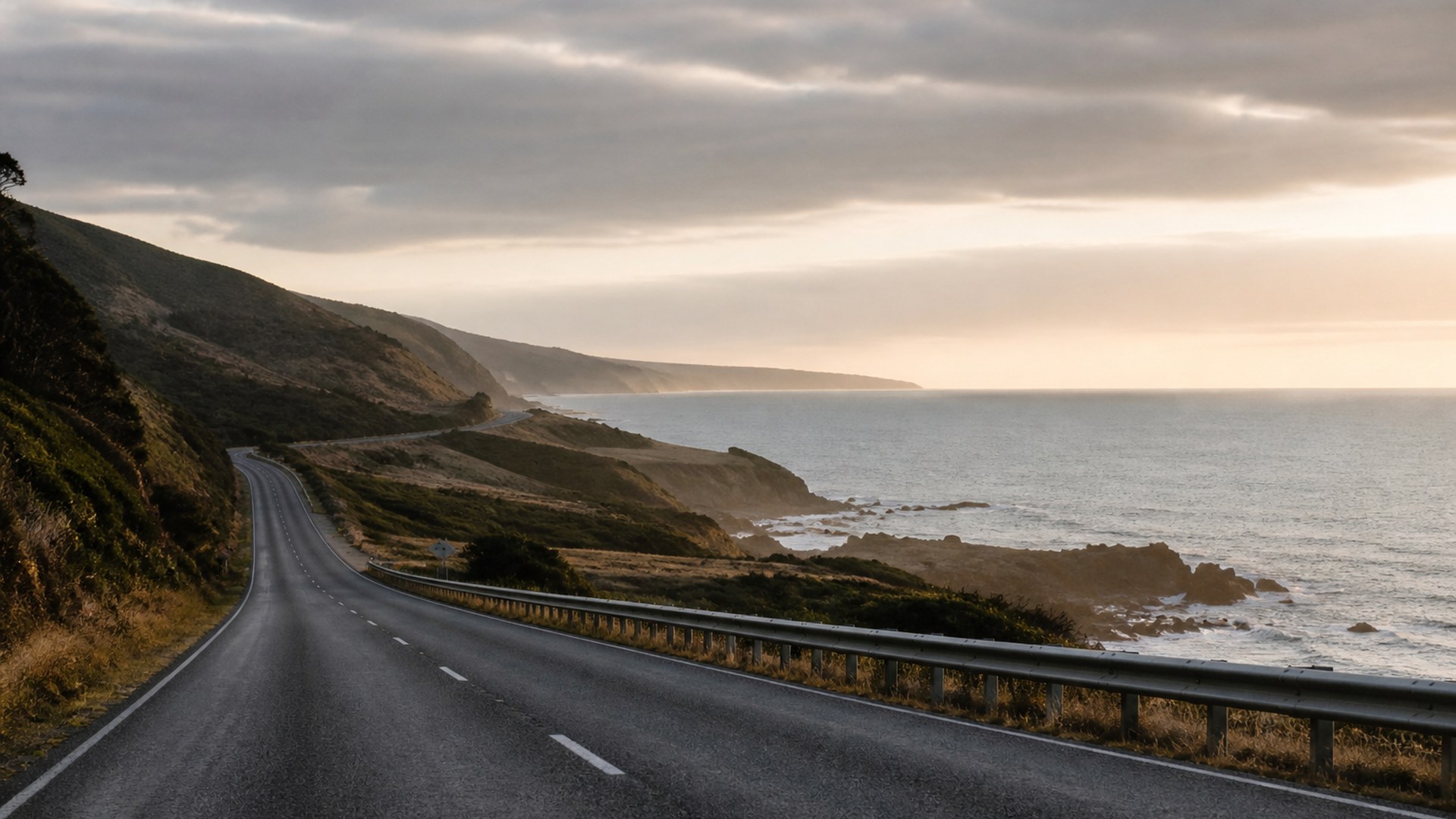
Read the campaign page the way a roads reporter reads a map. Long-term infrastructure in regional Victoria is the frame. “Upgrades to the Princes Highway and Bass Highway are our priorities, as is the massive backlog in regional road maintenance,” the site says. Next sentence: One Nation will champion revitalising Victoria’s regional rail networks, and “we will work to scrap the useless over-budget Metro Link — nothing more than a vanity project.” Those are the party’s own verbs. I'm keeping them as printed, not as a slogan sheet.
Princes Highway is the spine that threads Melbourne’s south-east toward Gippsland and the New South Wales border — A1 country in the old naming, still the truck and tourist corridor that carries freight and holiday traffic when the freeway ends. Bass Highway is the coastal run that stitches the Mornington Peninsula’s eastern edge toward Wonthaggi, Inverloch, and the Bass Coast towns that live on weekend cars and weekday semis. When a party puts those two names in one sentence with “regional road maintenance backlog,” it’s saying the sealed pavement outside the CBD still decides whether a dairy tanker, a timber truck, or a caravan gets home before dark.
Metric, because kilometres beat pamphlets. Melbourne to Sale on the Princes corridor is roughly 210 kilometres. Melbourne to Bairnsdale sits closer to 280. Phillip Island via the Bass Highway is about 140 kilometres from the city edge depending which exit you count. Those distances are ordinary. The backlog is what happens when ordinary distances meet deferred reseals, narrow shoulders, and flood-cut sections that wait years for a line item. One Nation’s page doesn’t publish a dollar figure for the backlog. It names the highways and the backlog in the same breath. I'm reporting the naming.
Energy sits next to the road list on the same page, and it isn’t a plant-night story. “We’ll push for a second interconnector across Bass Strait, and for the expansion of fuel storage facilities at Geelong,” the site says. Bass Strait already carries Basslink — the undersea HVDC link between George Town in Tasmania and Loy Yang in Victoria, about 290 kilometres of cable in the published project geography. A second interconnector is the party’s ask for more electrons between the island and the mainland. Geelong fuel storage is the liquid half of the same security sentence: more diesel and petrol sitting closer to the state’s west-facing port rather than riding thin stocks. You can hold a road upgrade and a fuel tank in the same campaign without turning either into a manifesto.
Metro Link — the vanity label on the page — is the party’s word for the metropolitan rail megaproject Labor has sold as city-shaping. Local coverage through 2026 has One Nation and its Victorian leader Warren Pickering arguing the Suburban Rail Loop and related Big Build spend should be torn up or sharply cut, with Pickering’s quick-fire answers on commercial radio putting “abolish” against a printed build-and-run bill in the hundreds of billions for the first stages. The campaign site’s older Metro Link phrasing and the 2026 loop fight are the same instinct: stop the city vanity, fund the regional pavement. I'm not inventing a new price tag the page doesn’t print. I'm putting the scrap verb next to the highway upgrades where the party put it.
Why does a highway list matter in a November election? Because Victoria’s regional vote still drives on bitumen. Resolve Political Monitor fieldwork mid-August 2026, the poll AAP and The Conversation put under other One Nation launches, had One Nation’s Victorian primary around 23 percent, Labor about 25, the Coalition about 27. A party sitting in the low twenties with Hanson and Pickering on the road is not a footnote when it names Princes and Bass as priorities. The Australia Today write-up on the candidate unveil framed crime, debt, taxes, agriculture, and Big Build integrity as the surge themes. Roads and regional maintenance sit under that integrity-and-cost frame: money that could reseal a shoulder instead of chasing another CBD tunnel kilometre.
Local coverage of the highway priorities isn’t new ink invented this morning. The Princes–Bass sentence has lived on One Nation’s Victorian vote page since the last state contest and remains the live language going into 28 November 2026. That continuity is the point. Parties change plants and pamphlets. They keep the corridor names when the corridor still floods, still cracks, still carries the milk. Pauline Hanson’s national machine is leaning into Victoria harder this cycle — candidates named, valley visits, farmer events flagged in the same Australia Today coverage — and the website still opens the infrastructure paragraph with two highways and a backlog.
Bass Strait’s second interconnector deserves a plain-English beat. Tasmania’s hydro and wind surplus only helps Victorian peak demand if the cable capacity exists to move it. One link is a single point of failure and a single market path. A second path is redundancy in the engineering sense: another pipe for electrons when the first is down or constrained. Geelong’s fuel storage ask is the same logic for molecules. The port already handles refining and import traffic on Corio Bay. Expanding storage is a buffer against shipping delays and east-coast stock squeezes. One Nation prints both asks next to the highway upgrades. Energy security and road security share a page because regional Victoria feels both when a tanker is late or a lane is closed.
Primary source: onenation.org.au/vote-one-nation-victoria. The printed nouns on that page are Princes Highway, Bass Highway, regional maintenance backlog, Bass Strait second interconnector, Geelong fuel storage, and scrap Metro Link. The election calendar is Saturday 28 November 2026. Local and national colour around the Victorian surge sits under those nouns. A coal plant doesn’t belong in this lede.
Naming the regional roads is ordinary politics done in ordinary language. A campaign that puts sealed kilometres and a maintenance backlog on the website is speaking to towns that count potholes, not press releases. Whether you vote for the party or not, the highways are real. The backlog is real. Bass Strait’s second cable and Geelong’s tanks are proposals you can argue on engineering grounds. Scrap Metro Link is a budget fight. Put them in order. Don't mash them into a valley night.
Princes. Bass. Backlog. Second Bass Strait interconnector. Geelong fuel storage. Scrap Metro Link. onenation.org.au. November state election, 28 November 2026. The road list is the story.
The paper
Comments
No notes on this story yet.
Sign in to comment