
The enriched uranium left Venezuela. Thirteen-and-a-half kilograms, out of the RV-1 research reactor, into a cask, onto a ship, into Savannah River. That’s the news from DOE/NNSA, not a rumour.
The National Nuclear Security Administration says it removed all remaining enriched uranium from the legacy RV-1 reactor in a mission run with Venezuelan partners, the United Kingdom, and the IAEA. The material reached U.S. shores in early May 2026 and moved to the Savannah River Site for processing and reuse. energy.gov carries the primary.
Brandon Williams, NNSA Administrator, put the win in one line: “The safe removal of all enriched uranium from Venezuela sends another signal to the world of a restored and renewed Venezuela.” He credited teams on the ground with finishing in months what would normally take years. The kilograms are gone and the IAEA was in the room. It is a removal that happened.
RV-1 — Reactor Venezolano 1 — is the country’s first and only research reactor, built under the old Atoms for Peace lineage in the 1960s. It supported physics and nuclear research for decades. That work finished in 1991. Most used fuel left in a 1999 campaign. What remained — assemblies and plates enriched above the crucial 20 percent threshold — sat as surplus HEU with a proliferation flag on it. NNSA’s Office of Defense Nuclear Nonproliferation treated that flag as unfinished business. Thirteen-point-five kilograms is about 30 pounds. Small on a freight scale. Large on a security scale when the enrichment crosses twenty.
Timeline in ordinary nouns. After Energy Secretary Chris Wright’s February visit to Venezuela, DNN worked with State personnel in Washington and Caracas, UK experts, the Venezuelan Ministry of Science and Technology, and the IAEA to prepare a site assessment. Less than six weeks after the initial site visit, DNN specialists and the Venezuelan Institute for Scientific Research removed the 13.5 kilograms and packaged it into a spent-fuel cask under IAEA cooperation. Overland escort covered about 100 miles — roughly 160 kilometres — to a Venezuelan port. The UK’s Nuclear Transport Solutions supplied the specialised carrier. Early May: arrival on U.S. shores. Then overland to Savannah River Site in South Carolina.
Savannah River’s job is the renaissance half of the same sentence. DOE’s Office of Environmental Management took custody at SRS. Technicians are to process the material at H-Canyon — the only operating production-scale, radiologically shielded chemical separations facility in the United States — to recover material as high-assay low-enriched uranium for advanced reactors. HEU out of a shuttered research core; HALEU into America’s nuclear build path. That is the nonproliferation-to-renaissance bridge NNSA printed. ANS Nuclear Newswire and the U.S. Embassy’s regional release carried the same arc in May. SRS’s own June follow-up detailed L Area receipt and the later H-Canyon path.
Dr. Matt Napoli, DNN’s Deputy Administrator, travelled to Venezuela to oversee the operation. “I couldn’t be prouder of the men and women who carried out this vital mission,” he said. He thanked Venezuelan partners for finalising the removal and “establishing the foundation for future cooperation.” Since 1996, NNSA and its predecessor offices have removed or confirmed disposition of more than 7,350 kilograms of highly enriched uranium and plutonium from dozens of countries. Venezuela’s 13.5 kilograms sit inside that long ledger, not as a one-off stunt.
Why the roads-and-casks story matters for a politics year. Maduro’s removal and the interim Rodríguez period opened a three-phase plan Trump and Rubio could accelerate. Nuclear security was one of the early deliverables — faster than a multi-year legacy schedule. Embassy messaging said the HEU mission landed more than two years ahead of the original plan. When a nonproliferation office can move that fast with IAEA eyes on the packaging, the signal is institutional competence, not just a press release. Call that a win without dressing it as a reactor restart. RV-1 stayed a legacy core. The uranium left.
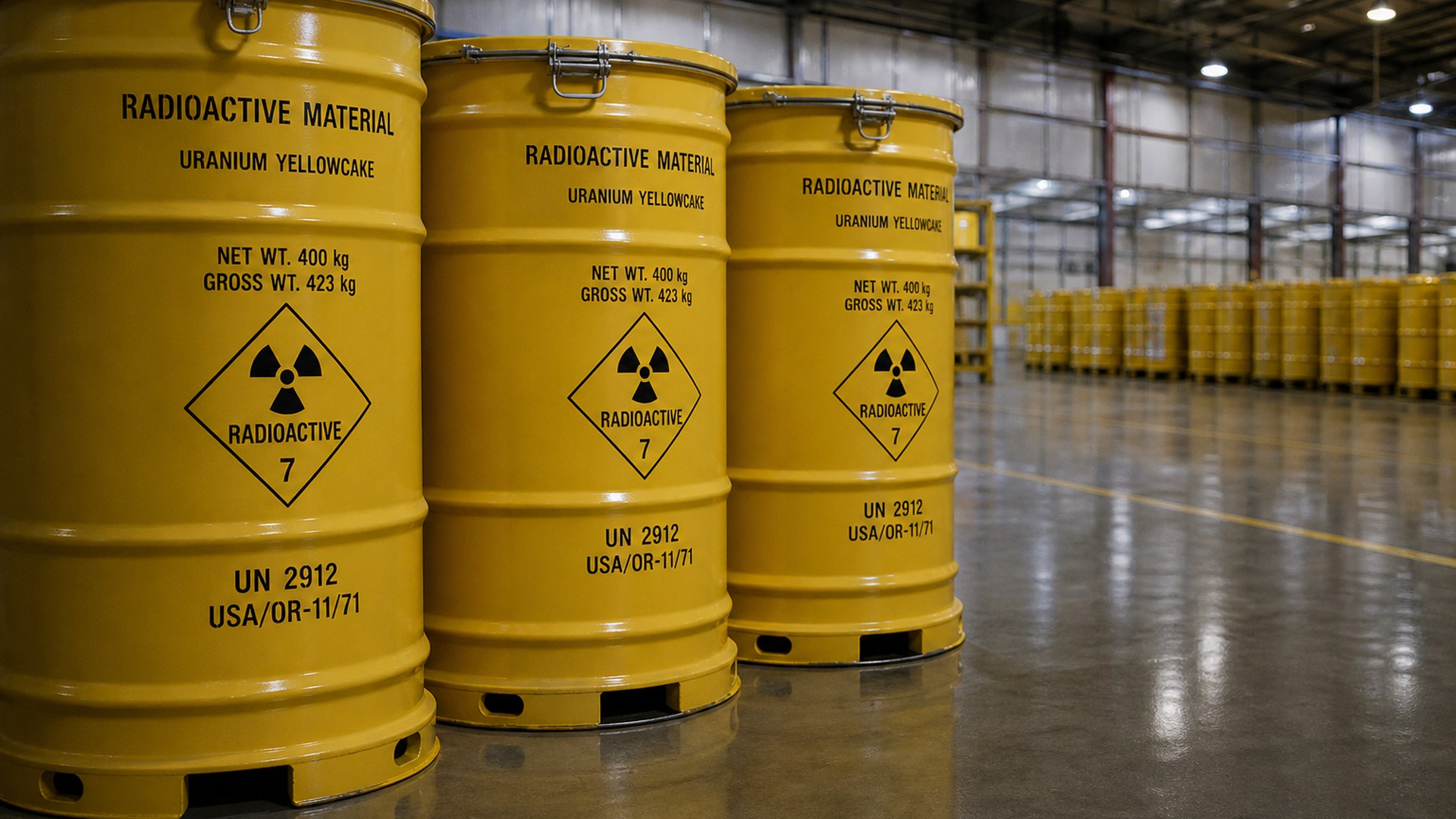
Numbers on the journey. 13.5 kilograms in the cask. About 160 kilometres overland to port. An Atlantic crossing on a specialised nuclear transport vessel. Charleston-area receipt surveys in the SRS telling. Secure storage at L Area before H-Canyon work. Each step is a chain-of-custody noun. Break any link and the mission fails. The links held. That’s why NNSA put photographs of cask loading on the energy.gov article and why SRS published the receipt mission in June.
Nuclear renaissance colour, kept honest. HALEU is the fuel form advanced reactor designs want when they need enrichments above classical light-water levels but below weapons-usable HEU. Turning recovered research-reactor material into that feedstock is both a disposal path and a supply path. It does not, by itself, switch on a new American reactor next Tuesday. It does put atoms that were a South American risk onto a South Carolina flowsheet aimed at domestic fuel. Nonproliferation and build-out share a truck gate at SRS in this telling. That’s the overlap the primary prints.
Partners in one breath: United States, United Kingdom, Venezuela’s science ministry and research institute, IAEA technical cooperation. Four flags on one cask. That is how you retire a legacy risk without turning it into a unilateral raid story. The uranium left because the paperwork, the surveys, the port, and the ship all lined up. May 8, 2026 is the NNSA article date. Early May is the arrival window. June 23 is the SRS receipt feature. Those are the stamps.
This is not the NABEP oil signature. It is not Wright’s operator quote on Squawk Box. Those are September oil files. This is a May nonproliferation file still worth the ink because the kilograms are at Savannah River and the renaissance processing path is printed. energy.gov/nnsa carries the primary. The SRS EM note and IAEA cooperation sit beside it.
RV-1. 13.5 kilograms. Above 20 percent enrichment, surplus since 1991. Cask. 160 kilometres to port. UK carrier. Early May U.S. arrival. Savannah River Site. H-Canyon to HALEU. IAEA in the process. NNSA primary on energy.gov. The uranium left. The risk left with it.
The paper
Comments
No notes on this story yet.
Sign in to comment