
Warren Pickering named the Act. Nuclear Activities (Prohibitions) Act 1983. That’s the news from the Latrobe Valley, 31 August into 1 September.
One Nation’s Victorian leader stood with Pauline Hanson east of Melbourne and said a One Nation government would repeal Victoria’s nuclear ban. ABC’s Jarrod Whittaker and Madeleine Stuchbery reported it. The Latrobe Valley Express put the same repeal in the local book on 1 September. The national ban is still a hurdle. The state key is what Pickering put on the table.
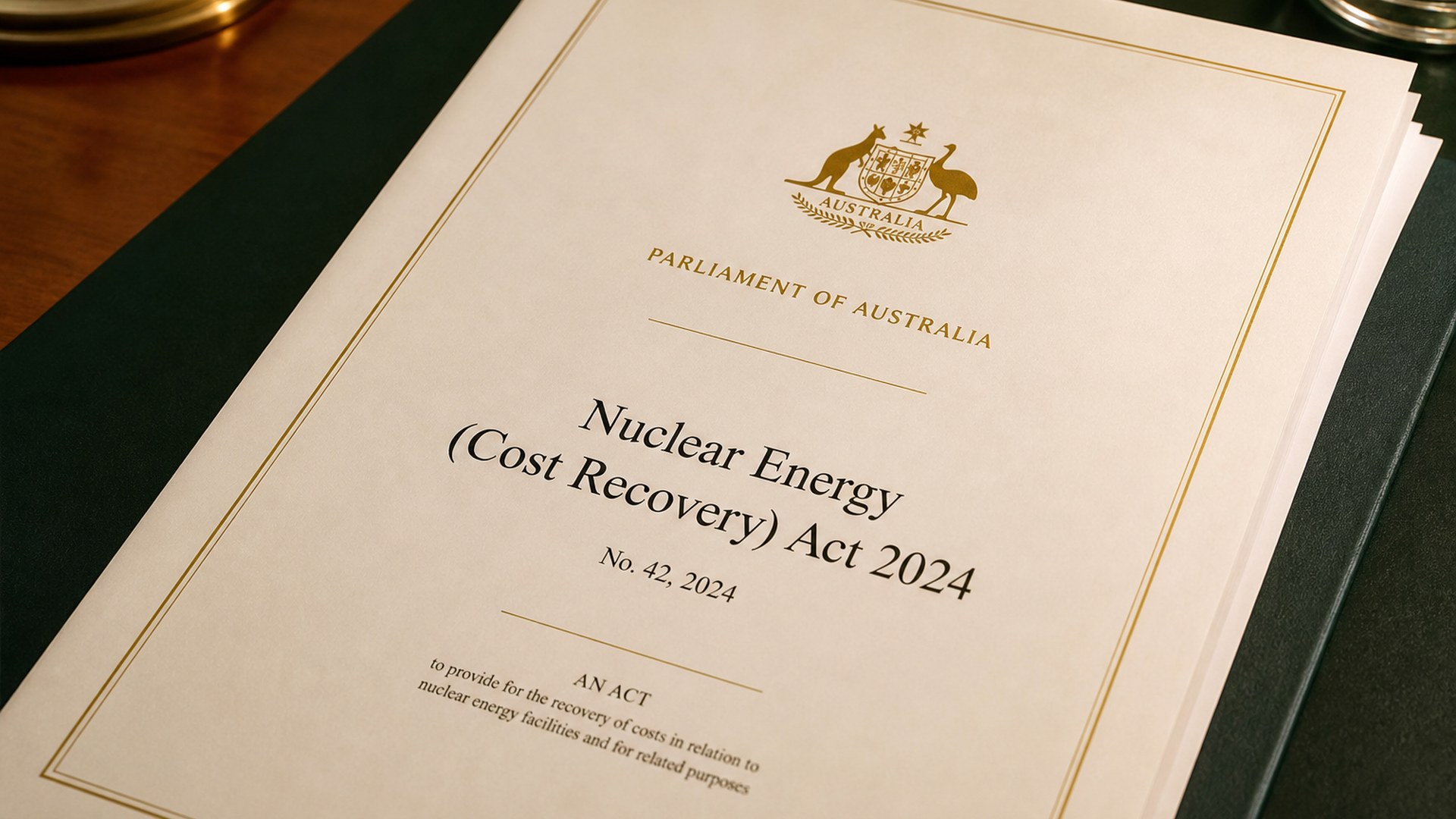
“Victorians deserve an opportunity to partake in the future of nuclear technology,” Pickering told reporters. “Whether that be through new technological innovations in thorium nuclear micro-reactor technology or in accordance with our federal policy position to develop a nuclear facility on the eastern seaboard with Victoria being a beneficiary.” Those are his sentences. I'm taking the Act as the peg.
The statute has a full name and a year. Nuclear Activities (Prohibitions) Act 1983. It has sat on Victoria’s books for more than four decades as the legal lock against building nuclear power and related fuel-cycle facilities in the state. Parliament has seen repeal bills before — David Limbrick’s 2023 repeal bill is on the Hansard shelf — and they did not become law. Pickering’s Monday pledge is to try again if One Nation holds the pens after 28 November. AAP’s Callum Godde, carried in the Canberra Times and elsewhere, named the Act in the same coverage as the valley launch. RenewEconomy’s write-through said Pickering acknowledged a national nuclear ban would be another hurdle to development. State repeal without federal clearance is a key without the federal lock turned. He said that out loud.
The country is allowed to say the word nuclear in a campaign sentence. Hanson used her first National Press Club address in June 2026 to call for nuclear on the national grid. On the valley morning she said reactors “need to happen.” “I’d suggest a couple across the country on the east coast by all means,” she said. “But you need that diversity of power.” Diversity, in her mouth, is coal, gas, and nuclear spoken without a flinch. You're allowed to print that as spoken English. You're allowed to notice that a major party competitor and a minor party with a mid-20s primary are both willing to put nuclear on a state ballot pamphlet.
Labor’s answer was immediate and named. Victorian Energy and Resources Minister Jaclyn Symes told ABC that reversing the moratorium showed “what is at risk for every Victorian.” “Toxic nuclear power will cost hundreds of billions of dollars, will take decades to build and only push up energy prices,” she said. “Farmers, and all Victorians are right to ask where this nuclear power plant will go, and where the toxic waste will go.” Those quotes stay on the page as reaction. They are not the lede. The lede is the Act Pickering named.
Experts got the second bite. Grattan Institute’s Tony Wood told ABC cost was a major deterrent. “None of the companies that I know of would be particularly interested in building a nuclear power station anytime soon,” he said. No industry at scale, thin university pipelines, no ready regulatory stack for civil nuclear build — his list. Bruce Mountain, Victoria University’s Victoria Energy Policy Centre, was cooler on the renewable-energy-zone scrap sitting in the same announcement and said changing zone labels “might not have much impact.” Both men stay as named colour. The Act stays the spine.
Latrobe Valley Express, 1 September, gave the local reception its own headline energy and still printed the repeal. Pickering: ensure Victoria can partake in any future of nuclear technology, “whether that be small micro-reactors, or in accord with One Nation’s federal policy as beneficiary of a major nuclear power plant on the eastern seaboard.” A local mayor’s line in that coverage — the ban “was changed on the stroke of a pen, it can be changed” — is the municipal version of the same idea. Voices of the Valley’s Wendy Farmer rejected nuclear outright in the same local package. For-and-against in one Gippsland paper is how a valley town actually argues. I'm not flattening it.
Geography in kilometres. The Latrobe Valley sits about 165 kilometres east of Melbourne on the published energy-map distances. Hanson and Pickering did the announcement with Narracan candidate Ben Lucas and Eastern Victoria’s Greg Hansford in the frame. Miners Lookout and Jack Vines lookout appear across the AAP and Express coverage as the viewing points over the brown-coal complex. The nuclear sentence was spoken in coal country. That does not make the nuclear sentence a coal lede. It makes it a sentence spoken where the state’s electrons have historically come from.
Federal lock, state key — say it once more in plain words. Even if Victoria repealed the 1983 Act tomorrow morning, Commonwealth law still constrains nuclear power development. Pickering said the national ban is another hurdle. Hanson is pushing the federal side from the Senate and the Press Club. A state election cannot rewrite Canberra’s statute book. It can change Victoria’s. That’s the honest scope of Monday’s pledge.
Election maths sit under the policy without becoming the story. Resolve mid-August: One Nation primary about 23 percent, Labor 25, Coalition 27, Greens 12 in The Conversation’s cut of the same fieldwork. Writs Tuesday 3 November, polling day Saturday 28 November. A party that can put “repeal the 1983 Act” into a valley microphone while sitting within shouting distance of Labor’s primary is running a live argument, not a protest footnote.
First noun on this story: the Nuclear Activities (Prohibitions) Act 1983. Second: repeal. Third: national hurdle. Fourth: Victorians allowed to say nuclear out loud on a campaign stage. A 2035 close date and a keep-open promise belong elsewhere. They don’t open this one.
Pickering. Hanson. Latrobe Valley. 31 August–1 September 2026. Nuclear Activities (Prohibitions) Act 1983. Repeal as state option. National ban still a hurdle. ABC and Latrobe Valley Express on the record. Micro-reactors and eastern-seaboard beneficiary language as spoken. Symes opposed. Wood on cost and time. Election 28 November. The Act is the peg. The country can say the word.
The paper
Comments
No notes on this story yet.
Sign in to comment