
The socket is the news. At IFA 2026 in Berlin, NVIDIA put a ship month on a client SoC it had only teased through the summer: RTX Spark Windows PCs, N1X silicon, October. Not a discrete GPU in a thin chassis. A Grace CPU and a Blackwell GPU on one package, unified memory, Arm Windows, and a partner list that finally has dates instead of booth vapour. The company’s 3 September blog — “Sparks Fly: NVIDIA Accelerates Local AI at IFA 2026” — is the primary. TechSpot has been on the Surface Laptop Ultra track since Computex. The SoC is the story; the laptop skins are the delivery trucks.
Two SKUs. That is the part you write down before the OEM names. High end: 20-core Grace CPU, 6,144 CUDA-core Blackwell GPU, unified memory from 24 GB up to 128 GB, laptops and compact desktops at launch. Trim: 18-core Grace, 5,120 CUDA cores, unified memory 24 GB or 32 GB, laptops only for now, compact desktops later. Wccftech and Tom’s Hardware both reconstructed those configs from NVIDIA’s IFA briefings on 3 September. NVIDIA’s own blog leads with “a powerful 1 petaflop RTX Blackwell GPU, up to 128GB of unified memory and a highly efficient 20-core Grace CPU.” One petaflop is the company’s claim. I’m not inventing a precision or a price beside it.
Call the part by its right name. N1X is a system-on-chip, not a socketed desktop CPU you drop into an AM5 board and call a day. Grace cores on one side of the package, Blackwell RTX on the other, memory pooled so the CPU and GPU are not playing copy-tax across a long PCIe hop for every agent workload. That is why “up to 128 GB” matters more here than it does on a conventional laptop dGPU chart. The memory is the working set for local models, not just a RAM sticker for Chrome tabs. The lower SKU’s 32 GB ceiling is likewise a product decision, not a typo: thinner laptops, smaller pool, still the same SoC family.
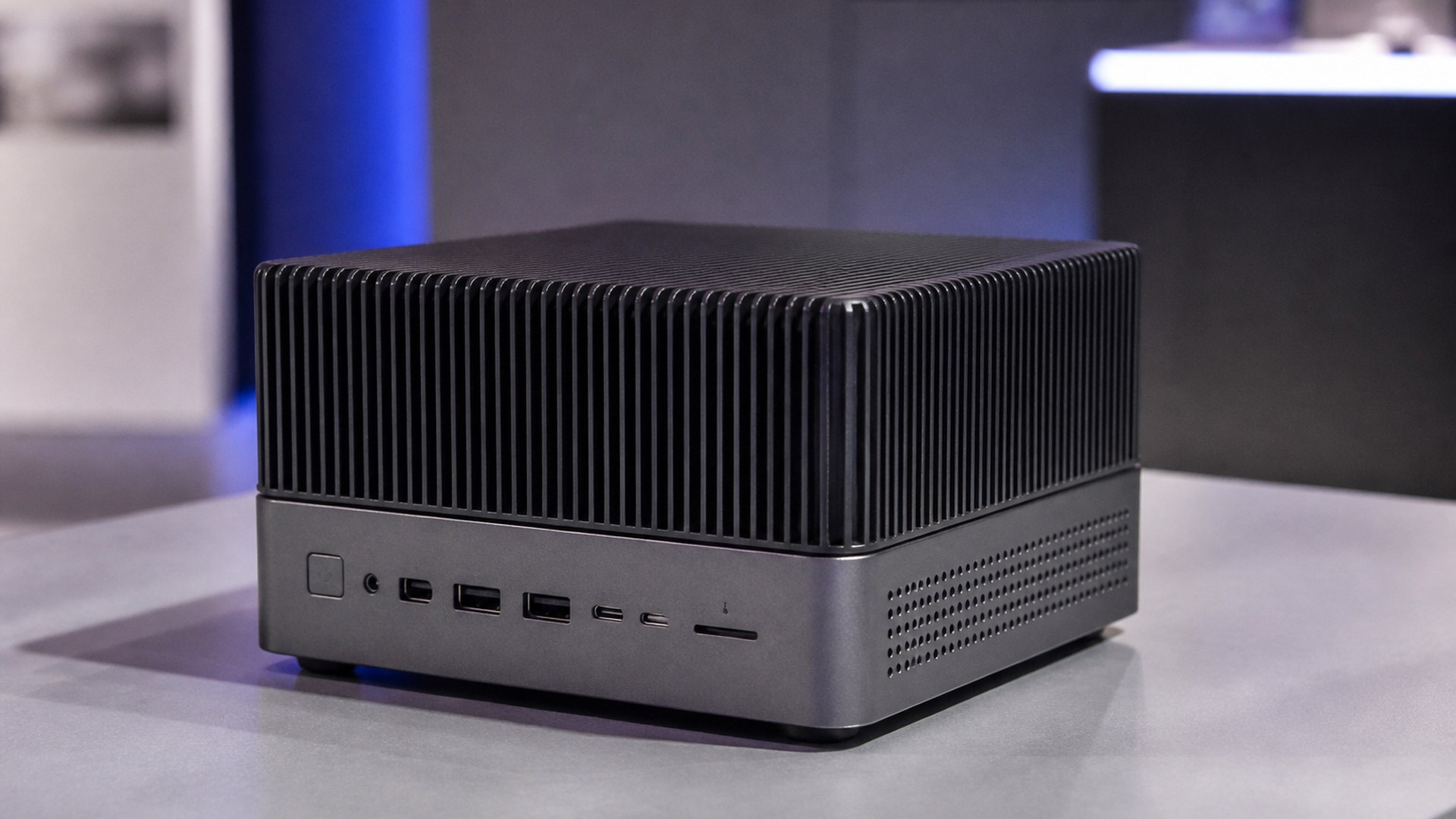
OEM metal at IFA is how you know October is not a shrug. Lenovo showed the Yoga Pro 9n and the Yoga 9n 2-in-1. Acer put a small-form-factor desktop concept on the floor. NVIDIA’s blog names those two explicitly for the October wave and says newly announced designs join six OEMs already lined up to ship. The wider partner set in the trade press — Asus, Dell, HP, MSI, Microsoft — matches the peg. Microsoft’s Surface Laptop Ultra has been public since Computex as a 15-inch Spark flagship with the full-fat N1X story and up to 128 GB unified memory; TechSpot covered the unveil and a later prototype leak. Exact regional day-one lists will still vary by vendor. NVIDIA told press availability rolls out market by market.
Lenovo’s Yoga Pro 9n is the clamshell to watch if you care about the high SKU in a working chassis. Trade coverage out of IFA puts a 15.3-inch class panel on it, PureSight Pro OLED in Lenovo’s language, and memory described as LPDDR5X on the high configurations — the same unified pool the SoC drinks from. TDP figures floating in partner sheets are partner sheets; treat power limits as OEM choices until NVIDIA publishes a single thermal design point for every box. Acer’s SFF is the other shape that matters: a compact desktop meant to sit on and keep agents warm when the laptop lid is closed. That is a different product psychology from a 14-millimetre ultrabook claim, and both are supposedly drinking from N1X.
Software is trying to make the SoC feel like a platform, not a demo. NVIDIA’s IFA post piles local-agent plumbing beside the hardware: faster llama.cpp and vLLM paths, one-click local setup talk for Hermes Agent and OpenClaw on RTX-class Windows boxes, Perplexity’s Portable Computer story, and PAIR — a personal AI router meant to farm inference across idle PCs on a home network. Windows Agent framework language shows up in the same breath: agents under OS-level control in the background. I’m not turning a blog bullet list into a benchmark. The company is shipping a client SoC into a software story it has been rehearsing all year.
Games are on the slide because NVIDIA will not let a Windows PC launch without them. Electronic Arts, Embark, and Ubisoft are named in the 3 September post as recent publishers bringing titles to RTX Spark, joining names NVIDIA said were already on the COMPUTEX board. “All-day battery life” is also on the marketing card. Both are claims. The SoC news does not require you to believe a frame-time chart you have not measured.
What isn’t on the IFA post is a price. NVIDIA has not put MSRPs there. Lenovo and Acer had not put retail tags on the Tom’s Hardware filing as of 3 September. Analyst guesses and forum prototype hunches are not my numbers. Ship month is October. Configurations are two. Memory tops out at 128 GB on the high SKU and 32 GB on the laptop-trimmed SKU. CUDA counts are 6,144 and 5,120. Grace cores are 20 and 18. That is the inventory.
Metric, because we run metric. One hundred and twenty-eight gigabytes is the headline pool. This chip’s story is millimetres of chassis and gigabytes of unified DRAM. Partner sheets talking 14-millimetre lids are interesting if they ship. They are not a substitute for the October carton.
Memory topology is the other half of the SoC story. Unified LPDDR5X-class pools on partner sheets mean the Blackwell side can drink from the same DRAM the Grace cores use for the OS and the agent runtime. That is why a 128 GB configuration reads differently from 128 GB next to a discrete laptop GPU with its own GDDR. The pool is the product. On the trim SKU, capping at 32 GB is how NVIDIA keeps a thinner, cheaper lid in the family without pretending every chassis is a workstation in a backpack. Starting points at 24 GB on both configs, per the IFA reconstructions, are the floor — not a recommendation for anyone loading a multi-tens-of-billions-parameter local model.
Arm Windows is the quiet dependency under every OEM slide. Spark ships as a Windows PC platform, not a Linux-only developer brick, and the agent-framework language only works if the OS treats background agents as first-class citizens. NVIDIA’s blog pairs the hardware with that Windows story on purpose. Compatibility for games is the parallel track: publisher logos at Gamescom and COMPUTEX are how you reassure buyers that an Arm SoC still means a PC. Until reviewers measure both paths on retail silicon, treat “1 petaflop” and “all-day battery” as adjacent marketing claims on the same brochure, not as lab results.
So for Sunday 6 September: a socket story wearing laptop clothes. N1X is real enough for NVIDIA to publish a month. Two SKUs split the CUDA and core counts cleanly. Lenovo Yoga Pro 9n, Acer SFF, Microsoft Surface Laptop Ultra, and the HP/Dell/Asus/MSI queue are the delivery list the trade press is carrying. The NVIDIA blog and TechSpot’s Surface trail are the primaries. No prices. No invented day-one SKUs beyond what partners showed. The news is that Grace-plus-Blackwell stopped being a keynote noun and picked up a calendar.
The paper
Comments
No notes on this story yet.
Sign in to comment