
The Pacific got a new contingency zone on paper. That is the FAA’s Final Tiered Environmental Assessment and Finding of No Significant Impact, dated about 2 September 2026, not a launch. The agency posted the Final Tiered EA and FONSI/ROD for SpaceX Starship reentry contingency operations in the Pacific Ocean and an additional Starship landing trajectory back to Starbase. The Federal Register notice of availability followed on 4 September.
Licence-class approval. Not a specific countdown. SpaceX still needs a modification to its existing vehicle operator licence before those Pacific boxes become authorised places to put a ship down. I'm treating the paperwork as infrastructure.
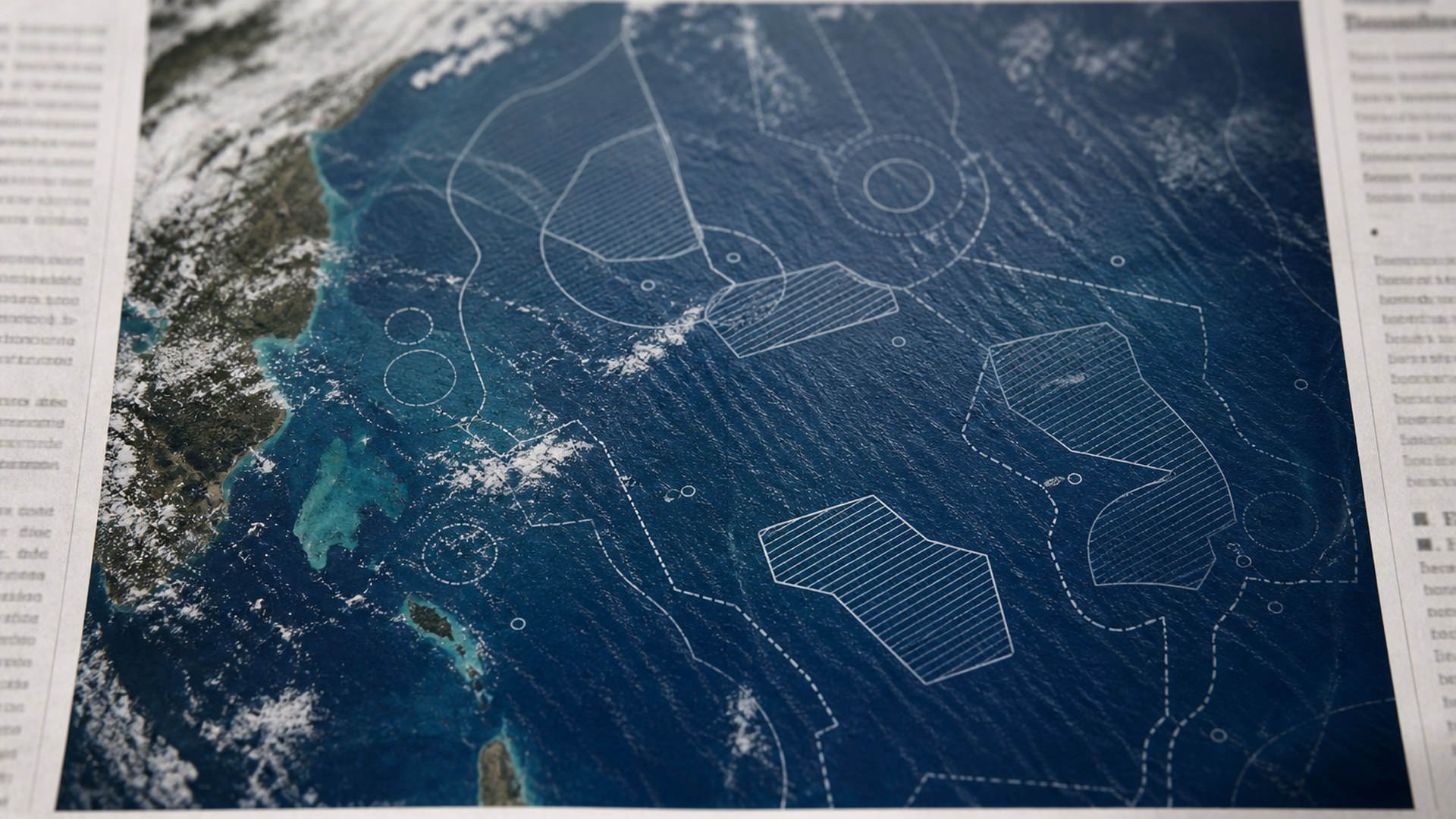
Under the Proposed Action the FAA would modify SpaceX’s vehicle operator licence to authorise three concrete things. Expansion of the previously evaluated Hawaii and Central Pacific Landing Area and the Southeast Pacific Region Landing Area. Addition of a new Northern Pacific Contingency Landing Area in the Northeast Pacific for an Eastern Range-to-Starbase trajectory. Authorisation of temporary airspace closures associated with an additional Starship reentry trajectory to the Boca Chica Launch Site in Starbase, Texas. That list is the FAA’s own project page, last updated Wednesday 2 September 2026. I'm walking it in that order.
BaseNor’s 2 September read called the Northern Pacific box the most operationally significant addition: a brand-new zone for the flight path from the Eastern Range — Cape Canaveral country — back toward Starbase in Boca Chica. NASASpaceflight, as BaseNor quoted it, said the licence update “adds a Northern Pacific contingency zone for Eastern Range-to-Starbase flights” alongside the airspace authorisation. Those are reporting desks on top of the primary. The primary stays the FAA page and the Federal Register notice Stacey Molinich Zee signed as Manager, Operations Support Branch, dated 2 September 2026.
A FONSI is a Finding of No Significant Impact. Under NEPA it means the agency concluded the proposed action will not have a significant effect on the environment, so it can proceed without a full Environmental Impact Statement. That is the faster of the two NEPA pathways. It is also not a flight licence. Port Isabel-South Padre Press, filing 3 September from the Lower Laguna Madre, put the local edge on the same document: an additional Starship reentry trajectory terminating at Boca Chica, and temporary airspace closures that could come with it. Contingency landings, the FAA line runs, could be needed if the catch tower is unavailable, if the spacecraft has operating issues, or if other safety circumstances make a Starbase return unsuitable. Alternate water is the point. Not a promise to splash near Hawaii on a named morning.
Cooperating agencies matter on a Pacific file. The Federal Register notice names NASA and the U.S. Coast Guard as cooperating agencies for special expertise and regulatory jurisdiction. The FAA is lead. The Draft Tiered EA went out for public review on 13 July 2026. The comment period closed 3 August after a one-week extension — twenty-two days in the notice’s arithmetic. Thirty-seven comments landed. Appendix F of the final package summarises them and the agency’s responses. All comments, the notice says, were given equal weight. That is how environmental paper actually moves: draft, comments, final, FONSI/ROD, then the separate licence modification that spends the authority.
Ordinary nouns. Paperwork as infrastructure. A contingency zone is a box on a map where a ship is allowed to come down if the primary plan fails. Expanding Hawaii and Central Pacific, expanding the Southeast Pacific, drawing a new Northern Pacific box for Eastern Range-to-Starbase — those are three pens on the same chart. Temporary airspace closures for a new reentry path to Boca Chica are the fourth pen, over land and lagoon as much as over water. You do not need a manifesto to read them. You need the project URL: faa.gov/space/stakeholder_engagement/spacex_starship. The Final Tiered EA and the FONSI/ROD are posted there for download, including a Spanish Final de la Evaluación Ambiental on the same shelf.
What this is not. It is not Flight 14’s GO. It is not the FCC STA that asked for orbital-second-stage radios from 15 September. It is not a catch of Ship 41 on the chopsticks. Those stories have their own nouns. This story’s nouns are EA, FONSI, ROD, Northern Pacific, Hawaii and Central Pacific, Southeast Pacific, Boca Chica reentry trajectory, licence modification still required. BaseNor was blunt that the environmental record closing is a prerequisite, and that the Office of Commercial Space Transportation’s licence amendment is the next document that sets flight rates, trajectory constraints, and safety zones. Attribute that sequencing to the reporting. Keep the FAA’s own verbs for the action itself.
Eastern Range to Starbase is the geographic idea inside the new Northern Pacific box. A vehicle that leaves Florida water and later needs a Pacific abort option on the way toward South Texas is flying a different sketch than a pure Starbase-out, Gulf-or-Indian-Ocean-home profile. Orbital and near-orbital speeds over international water need regulatory coverage without gaps. That is why contingency footprints grow before cadence does. Up to twenty-five annual Starship/Super Heavy orbital launches already sit in earlier cadence paper on the same FAA project page — landings of ship and booster counted in the same breath. This week’s FONSI does not invent that cadence number. It widens the water the cadence is allowed to use when something goes sideways.
Metric geography, because kilometres still beat slogans. Starbase sits in Cameron County, Texas, on the Boca Chica Launch Site. The Northeast Pacific contingency is drawn for trajectories that thread from the Eastern Range toward that Texas pad. Hawaii and Central Pacific, and the Southeast Pacific, are expansions of zones already evaluated on prior Starship paper. Distances are ocean-scale. A contingency splashdown is not a droneship bullseye with a Culture name. It is a permitted expenditure of the vehicle in a downrange box when Starbase is the wrong answer. The Federal Register notice uses that word — expenditure — for putting the ship into those additional Pacific areas. I'm keeping the agency’s noun.
Local Texas readers get a second clock. Temporary airspace closures for an additional reentry to Boca Chica mean NOTAMs and closed sky over the Lower Laguna Madre when that profile flies. Port Isabel-South Padre Press said so without turning it into a panic. The environmental review clears the path for the licence shop to authorise the profile. It does not schedule the first return on that line. South Texas already lives with Starbase noise, road closures, and catch-tower weather. Another reentry corridor is another procedural object on that list.
Put the week’s Starship paper on one board without mashing the stamps. About 28 August: Booster 21’s full-duration 33-engine static fire for Flight 14, already filed. About 21 August: Ship 41’s six-engine full-duration burn. Late August into 1 September: FCC STA coverage for an orbital second stage, window opening 15 September NET. About 2 September: this FONSI/ROD on Pacific contingency and an extra Starbase reentry trajectory. Four objects. Four verbs. Static fire, radio authority, environmental finding, still-pending licence modification. Say each one once, in metre and in order, and refuse the mash-up that turns every PDF into a launch announcement.
The Pacific’s new zone is on the FAA shelf. Thirty-seven comments answered. NASA and the Coast Guard listed as cooperating. Northern Pacific drawn for Eastern Range-to-Starbase. Hawaii and Central Pacific expanded. Southeast Pacific expanded. Boca Chica airspace language for another way home. Licence modification still the gate. That is the infrastructure. Not a webcast. Not a cheer. A map with more water on it, filed so the next flight that needs an abort box already has the paper waiting.
The paper
Comments
No notes on this story yet.
Sign in to comment