Broadcom just named the next weight on its AI ledger. Anthropic is on track to be the company's largest XPU customer in 2027 and 2028 — and the gigawatt schedule behind that sentence is why the September results call mattered.
Fiscal Q3 2026 ended 2 August. Results landed 2 September 2026. AI semiconductor revenue hit US$16.7 billion, up 221% year over year and 54% quarter over quarter. CEO Hock Tan guided Q4 AI semis to US$21.7 billion, up 236% year over year, and lifted the full-year AI semi outlook toward US$58 billion.
Those are Broadcom's own numbers from the September release, carried by Broadcom PR, CRN, and TradingKey. Dividend is US$0.65, payable 30 September to holders of record 21 September. Useful for shareholders. Secondary to the AI semiconductor stack if you're reading for compute supply.
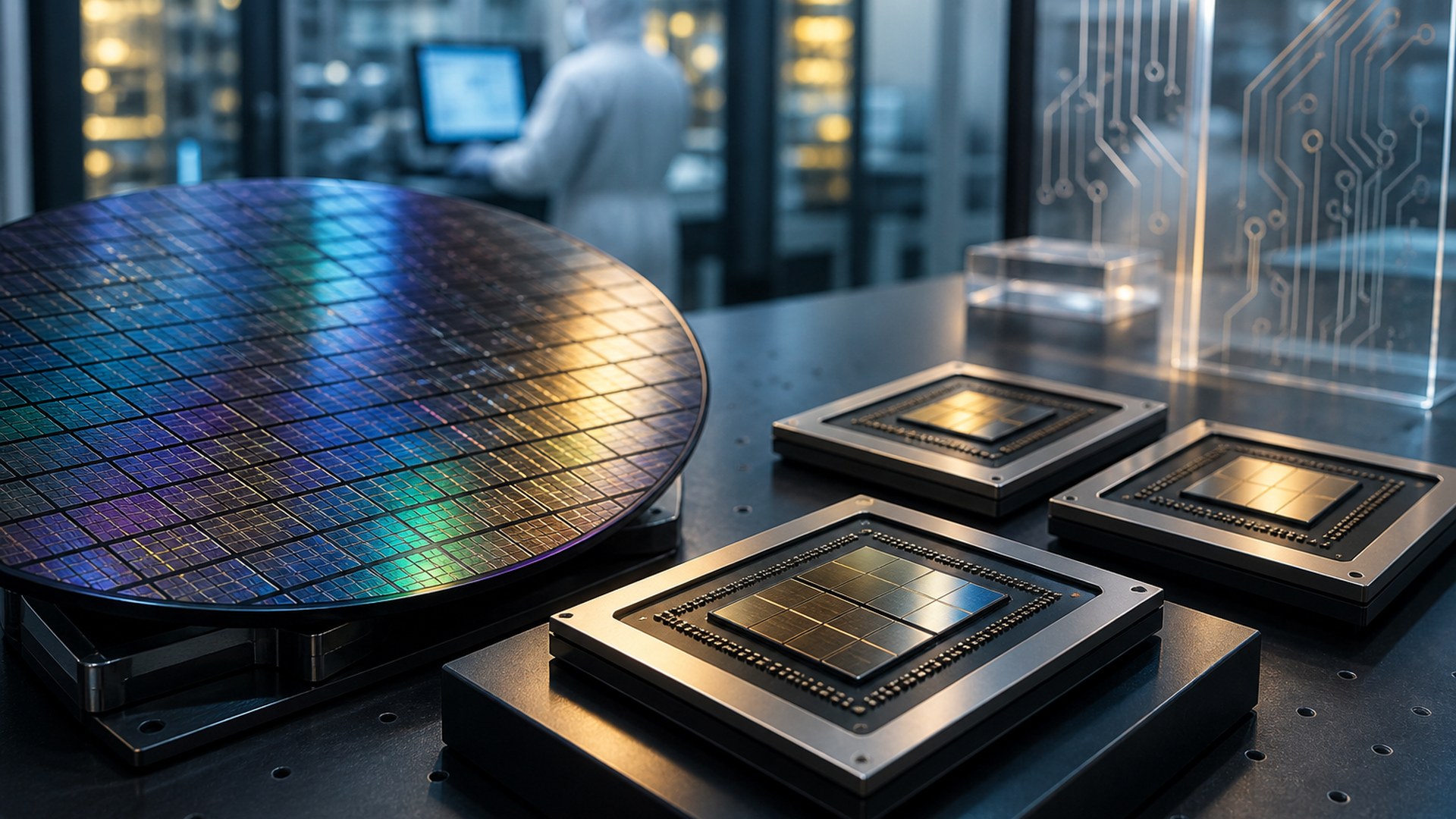
Hardware shipments are the concrete half. Broadcom says it delivered Ironwood — TPU v7 — in volume to Anthropic and Google. It has begun production shipments of the next-generation TPU v8i for Google. The v8i generation is described as carrying more memory and bandwidth, and as inference-optimized. Volume Ironwood to two customers, production v8i starting for Google: that's the near-term silicon story.
Anthropic's power schedule is the longer arc. One gigawatt of Ironwood in 2026. Another five gigawatts of TPU v8i in 2027. An incremental ten gigawatts in 2028. Broadcom's framing: Anthropic is on track to be the company's largest XPU customer across 2027–2028. Gigawatts here are a proxy for deployed custom accelerator capacity, not a marketing metaphor. One, then five, then ten more — that's the ladder as Broadcom presented it.
OpenAI sits on a parallel track in the same briefing. Jalapeno is pegged at about 1.3 gigawatts in 2027. Jalapeno and its successors are pegged at more than five gigawatts in 2028. Meta's line: three generations of MTIA by the end of 2027, with three gigawatts visible through 2028. Named customers, named product families, named gigawatt envelopes. That's how Broadcom is teaching the Street to read AI semi demand.
Infrastructure finance is attached. Broadcom partnered with Apollo and Blackstone on more than twenty gigawatts of compute infrastructure for OpenAI and Anthropic by the end of 2028. The first US$35 billion tranche closed in June for Anthropic's one-gigawatt slice. Equity and credit partners funding the campuses while Broadcom supplies the XPUs — that split is explicit in the September materials.
Line of sight, still from Broadcom's outlook language: AI semiconductor revenue around US$115 billion in 2027 and around US$230 billion in 2028. Those are forward figures Broadcom put next to the Q3 print and the Q4 guide — company outlook, not a third-party forecast. They sit above the raised full-year 2026 AI semi outlook toward US$58 billion. Q3's US$16.7 billion and Q4's expected US$21.7 billion are the bridge quarters into that multi-year slope.
Hock Tan's Q4 guide is the cleanest single sentence in the release pack. AI semiconductors expected at US$21.7 billion in Q4, up 236% year over year. Pair it with Q3's 221% year-over-year jump and 54% sequential rise and you get the growth rate without inventing adjectives. CRN and TradingKey repeated the percentages for a reason: they're the rare semiconductor lines growing at triple-digit year-over-year rates while already clearing tens of billions per year.
Why "Anthropic next" as the headline? Because the largest-customer call for 2027–2028 is a ranking change with gigawatts attached. Ironwood volume in 2026 at one gigawatt. TPU v8i at five gigawatts in 2027. Incremental ten gigawatts in 2028. OpenAI's Jalapeno path — about 1.3 GW in 2027, more than 5 GW with successors in 2028 — remains large. Meta's three MTIA generations and 3 GW through 2028 remain visible. Anthropic's ladder is the one Broadcom flagged as heading to the top of the XPU customer list.
Custom silicon is the product category underneath every logo. Ironwood is TPU v7. TPU v8i is the Google-bound next step with more memory and bandwidth, tuned for inference. Jalapeno is the OpenAI-named line in Broadcom's customer map. MTIA is Meta's accelerator family across three generations through end-2027. Broadcom is selling designed XPUs into those programmes and quoting gigawatts as the capacity unit customers and financiers both understand.
The Apollo/Blackstone partnership matters for readers who follow who pays for the buildings. More than twenty gigawatts of compute infrastructure for OpenAI and Anthropic by end-2028 is the joint target. The June close of a first US$35 billion tranche for Anthropic's 1 GW is the cash-on-the-table proof point. Broadcom's AI semi revenue is the chip side. The tranche is the campus side. Twenty-plus gigawatts is the combined infrastructure ambition tied to those two labs.
Fiscal calendar, briefly. Q3 FY2026 ended 2 August 2026. Results published 2 September 2026. Dividend US$0.65 payable 30 September to record holders as of 21 September. Full-year AI semi outlook lifted toward US$58 billion. Broadcom's line of sight: about US$115 billion in 2027 and about US$230 billion in 2028. Sources for this package: Broadcom's own PR, plus CRN and TradingKey coverage in September 2026.
I'm not inventing a launch event or a training-run rumour. The company printed AI semi revenue, guided the next quarter, raised the year, named Ironwood volume and v8i production shipments, laid out Anthropic's 1 / 5 / 10 GW path, OpenAI's Jalapeno gigawatts, Meta's MTIA gigawatts, and the Apollo/Blackstone infrastructure partnership with a US$35 billion first tranche already closed. Anthropic as largest XPU customer in 2027–2028 is Broadcom's own ranking language.
Read the customer ladder as capacity planning, not wishful casting. One gigawatt of Ironwood for Anthropic in 2026 is the delivered-and-delivering near term. Five gigawatts of TPU v8i in 2027 is the production ramp Broadcom is already starting to ship into for Google-class silicon while Anthropic's share of that generation is called out separately. Ten incremental gigawatts in 2028 is the year the ranking language — largest XPU customer — has to be earned on volume. OpenAI's Jalapeno at about 1.3 GW in 2027 and more than 5 GW with successors in 2028 keeps a second hyperscaler on a steep curve. Meta's three MTIA generations by end-2027 and 3 GW visible through 2028 fill the third column. Broadcom's AI semi story in September 2026 is that three-column spreadsheet plus the Apollo/Blackstone capital stack behind two of the names.
Inference versus training shows up in the v8i description without needing a product white paper. More memory. More bandwidth. Inference-optimized. Ironwood TPU v7 already went out in volume to Anthropic and Google. The next chip generation is being positioned for the serving half of the workload mix as much as for training clusters. That product note sits next to Anthropic's multi-gigawatt commitments because serving at scale is where inference silicon earns its keep. You can take Broadcom's wording at face value and still wait for third-party teardowns later.
Q3 AI semis: US$16.7 billion (+221% YoY, +54% QoQ). Q4 AI semis expected US$21.7 billion (+236% YoY). Full-year AI semi outlook toward US$58 billion. Ironwood TPU v7 in volume to Anthropic and Google; TPU v8i production shipments begun for Google. Anthropic: 1 GW Ironwood in 2026, 5 GW TPU v8i in 2027, incremental 10 GW in 2028 — on track as Broadcom's largest XPU customer for 2027–2028. OpenAI Jalapeno about 1.3 GW in 2027 and more than 5 GW with successors in 2028. Meta: three MTIA generations by end-2027, 3 GW visible through 2028. Apollo/Blackstone partnership for more than 20 GW by end-2028; first US$35 billion tranche closed in June for Anthropic's 1 GW. Broadcom's line of sight: about US$115 billion AI semis in 2027 and about US$230 billion in 2028. Dividend US$0.65 on the stated dates. That's Broadcom naming Anthropic next — with gigawatts attached.
The paper
Comments
No notes on this story yet.
Sign in to comment