
Tesla tore out Fremont’s Model S and Model X floor in about 46 days, stood Gen 3 Optimus up on the same square metres, and started low-volume builds through late July and August. Early robots stay inside Tesla — Optimus Academy and factory learning loops — with outside sales still aimed at the second half of 2027.
Elon Musk walked the new line on 1 July. On the Q2 2026 call on 5 August he said production was starting “soon,” called Optimus the hardest product Tesla has ever tried to scale, and warned that the ramp will move only as fast as the least lucky part among roughly 10,000 unique components. You’re looking at a manufacturing start, not a showroom launch.
Here’s the short version of what changed at Fremont. The last Model S and Model X vehicles left that hall around 9 May 2026. Tesla Manufacturing posted a time-lapse of the teardown — concrete pits, conveyors, the heavy kit that had built premium cars for more than a decade. Forty-six days later the same floor was being fitted for a humanoid. Ashok Elluswamy, Tesla’s VP of AI Software and the executive leading the Optimus programme, framed the handover as big shoes to fill and said he was confident Optimus wouldn’t disappoint. Sentiment aside, the floor plan is the fact.
Model 3, Model Y, and Cybertruck lines at Fremont were described in factory explainers as unaffected. The Optimus move took the premium-vehicle hall, not the high-volume car lines. If you were worried robot ambition would starve vehicle output in the same building, current reporting says those stories sit on different square metres.
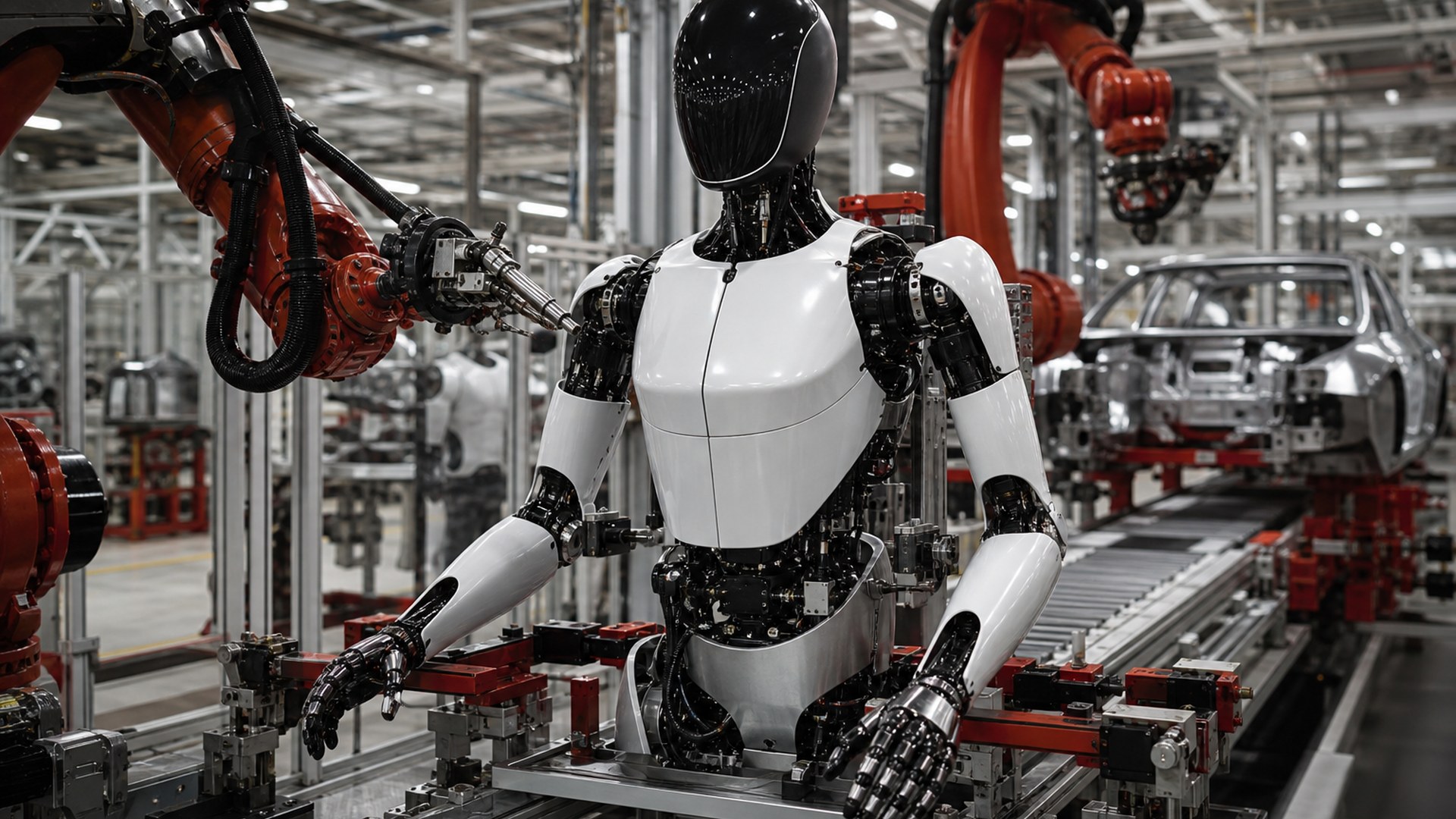
How Fremont got emptied that fast
Forty-six days sounds neat until you remember what used to live under that floor. Premium-vehicle lines aren’t flat slabs. They’re pits, conveyors, fixtures, and years of process knowledge poured into concrete. Tesla Manufacturing’s time-lapse of the S/X teardown showed the ugly middle: trenches opened, kit ripped out, rebar and new flooring going in before Optimus fixtures could land. The speed is how Tesla moves a plant when it decides a product chapter is over. The product waiting on the other side is not like anything Tesla has volume-built before.
Model S had been on that campus for about fourteen years in the longer tellings; Model X for about eleven. Ending both with what Musk called an honorable discharge on the Q4 2025 call was a vehicle decision and a real-estate decision at once. You don’t clear a hall that fast unless you already know what you want the square metres for. By late June the teardown was done and new equipment was going in. By 1 July Musk was posting from the Optimus production team on the same footprint.
That sequence is why “Fremont builds the first Optimus” is a factory headline, not a keynote headline. The cars stopped. The floor changed. The robots started at low volume. You can argue about how many units left the fixtures in August. You can’t argue that the building’s job description changed.
What “production” means here
Production, in this case, does not mean a consumer SKU you can order. Coverage through late summer 2026 — including RobotsBeat on 2 September and Motley Fool’s late-August investor notes — put Gen 3 on the Fremont line at low volume after the July line walk. Early units are for internal training and data collection. External and consumer sales are still targeted for the second half of 2027 on the public timeline Tesla has been repeating.
That split matters more than the word “production” by itself. Internal robots that work poorly still generate motion data, failure modes, and software feedback. External customers get hardware when the company says the product is ready to leave Tesla’s own floors, not when the first fixture lights up. Motley Fool and other mid-2026 notes stressed the same point: production start is a landmark, not a commercial pivot overnight.
Axis Intelligence estimated on the order of 1,000 to 1,200 Optimus units mid-2026 across Fremont and Texas. Tesla has not confirmed that figure. Treat it as an estimate from outside the company, not a shipment number from the IR deck. Through 2025, reporting put cumulative builds around 150 units. The jump from prototype-scale totals to a low-volume line is real. The exact mid-year headcount is still someone else’s count until Tesla publishes its own.
Musk has said Optimus will follow a normal manufacturing S-curve, with the early portion long and flat because almost everything on the robot is new. He’s also said — as a claim, not a proven balance-sheet fact — that Optimus could account for something like 80 percent of Tesla’s long-term value. You can hold both sentences at once. One is a ramp warning. The other is a CEO’s bet on where the company ends up. Neither one is a weekly production chart.
The hardware on that line
Gen 3 is the generation Fremont is building. Public design notes in mid-2026 coverage point to a hand with about 22 degrees of freedom, actuators routed through the forearm on tendons, and a heel-to-toe foot with pressure sensors. Test speeds around 13 km/h have shown up in write-ups. The AI5 chip was described as taped out in April; some coverage has put volume AI5 closer to mid-2027 — attribute that carefully, because tape-out and volume silicon are not the same milestone.
None of that makes a shipping appliance tomorrow. It does tell you what the internal units are meant to exercise: dexterity, balance, on-robot compute, and repeated factory motion while Tesla collects real data. Tendon-driven forearm actuation and a 22-DoF hand look elegant in a teardown and brutal on a yield chart. Every extra degree of freedom is another actuator, sensor, cable route, and failure mode to qualify. That is why low-volume internal production is the sane first step. Break the parts in your own factories before you promise them to someone else’s warehouse.
Confirmed internal task categories cited in coverage include 4680 cell sorting, parts handling, kitting, quality inspection, and pick-and-place. Tesla has not published cycle times or error rates for those jobs. So you can say the robots are being pointed at real factory work. You cannot yet say how many cells per hour, how many false rejects, or how long a unit stays online before a human has to step in. The gap between a demo clip and an eight-hour shift is still the story the Fremont line exists to close.
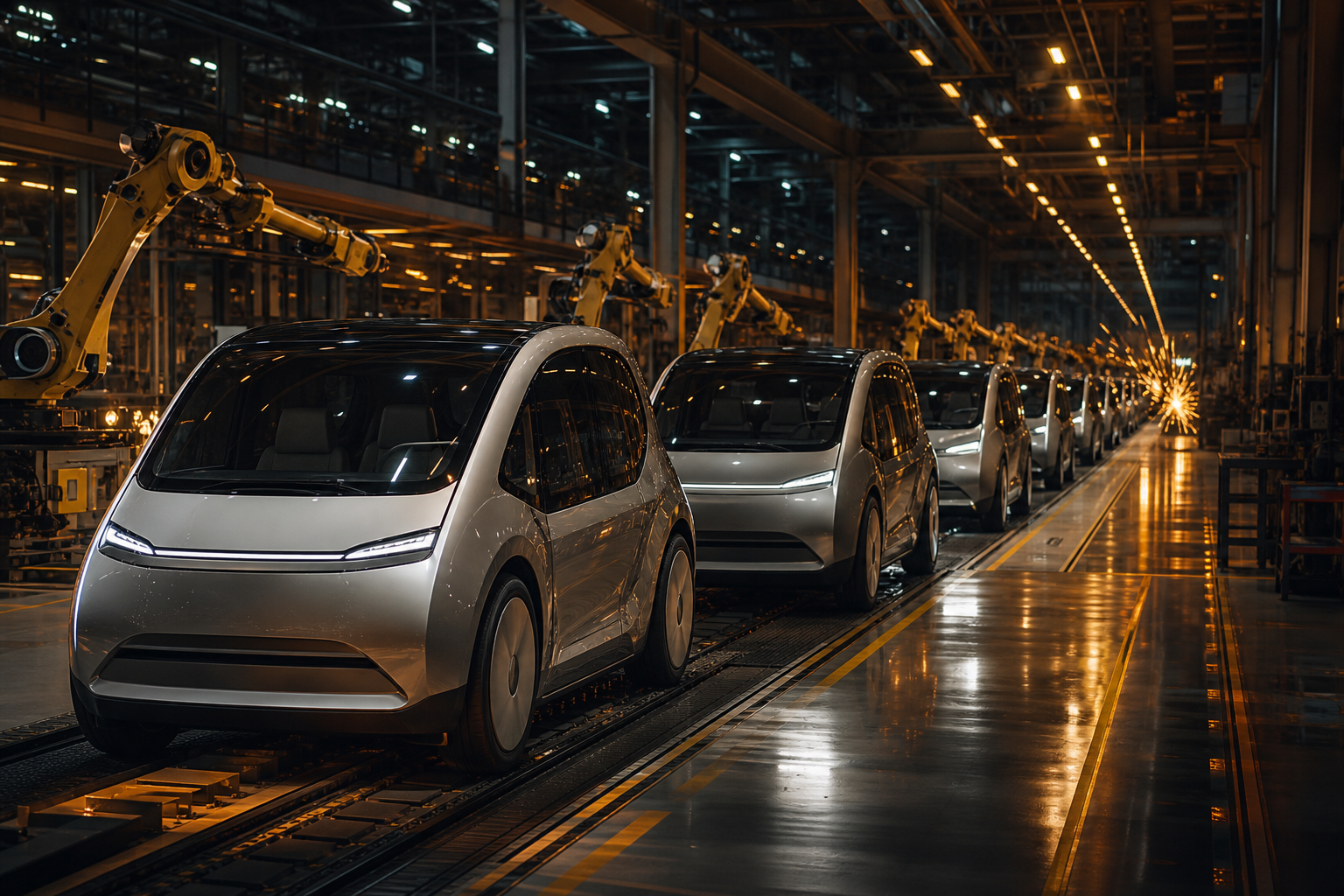
Ten thousand new parts — and why Musk keeps saying “extremely slow”
Parts count is sobering if you’ve ever launched a vehicle programme. Coverage has put Optimus on the order of 10,000 unique components — a Model S-scale bill of materials without a century of automotive suppliers behind it. Musk has said everything on the robot is new and that Tesla had to build a supply chain from scratch or pull work in-house. On the August call he put the difficulty of the ramp in proportion to that newness: the line moves as fast as the least lucky part among those thousands.
After the 1 July line walk, he set the same expectation in plainer language: production would be extremely slow at first because everything is new; this is not like making a car. On 5 August he sharpened it. Hardest product to scale in Tesla’s history. No existing supply chain to tap. Long flat early S-curve.
Readers sometimes hear “slow” as spin. Here it’s closer to a manufacturing confession. Cars inherit a century of stamped-metal suppliers, fastener catalogues, and process books. Humanoids inherit almost none of that. There is no mature vendor shelf for tendon-routed forearm actuators at automotive volumes. There is no off-the-shelf playbook for qualifying a heel-to-toe foot with pressure sensing across thousands of walking hours. AI5 tape-out in April is a chip milestone; volume silicon on a schedule some coverage places around mid-2027 is a different milestone. Confusing the two is how you invent a ramp that doesn’t exist.
That’s why the Fremont ramp is slow on purpose. You’re not looking at a Model Y-style volume curve in month one. You’re looking at a manufacturing template that has to teach itself before Giga Texas tries to run harder. Musk has called 2026 output “literally impossible to predict” in some coverage; treat any tidy annual target you hear over coffee as directional until Tesla prints a rate it will stand behind.
So when Musk says the early S-curve will be flat, he’s telling you the shape of the graph before the graph is public. When he says Optimus could be 80 percent of Tesla’s long-term value, he’s telling you why the company is willing to endure that flat stretch. One sentence is a warning. The other is a thesis. Don’t collapse them into a single hype paragraph.
Academy first, customers later
Early units feed what Tesla and secondary coverage call Optimus Academy and internal factory learning. Robots work alongside people on Tesla’s own floors, observe tasks the way Elluswamy has described — learning from a “fleet” of human workers the way Full Self-Driving learns from a fleet of cars — and push data back into the next software pass. PYMNTS and the Q2 call both circled that “learns by watching” framing. Pre-programmed demo robots on the internet are not the same category. Musk’s point on the call was blunt: impressive clips are often remote-controlled or scripted; generalised task competence is the bar Optimus is supposed to clear.
Call it Academy or call it internal deployment — the point is the same. Early Gen 3 units are supposed to work inside Tesla, on Tesla tasks, generating Tesla data. Factory workers sorting cells, kitting parts, inspecting quality, and running pick-and-place become the teachers. The robots become the students, on the days they stay online and on-task.
That is a different product plan from “ship a humanoid to a third-party warehouse this year.” It is also a harder plan to score from outside. You won’t get a tidy public dashboard of Academy hours the way you get vehicle delivery numbers. You’ll get task categories in coverage, occasional demo footage, and whatever Tesla chooses to show on earnings calls. The absence of published cycle times and error rates isn’t a mystery. It’s what early internal programmes look like when the company still treats yield as proprietary.
Still, the task list that has been confirmed in reporting is concrete enough to be useful. 4680 cell sorting is not a parlour trick. Parts handling and kitting are the dull work that keeps a line fed. Quality inspection and pick-and-place are where dexterity claims meet lighting, reflection, and part variance. If Gen 3’s 22-DoF hand and pressure-sensing foot are going to earn their complexity, those are the jobs that will prove it — or expose it — long before a consumer price tag matters.
Elluswamy’s dual role matters for how you read the timeline. As VP of AI Software leading Optimus, he’s bridging the neural-net stack that also drives Tesla’s autonomy work and the physical robot that has to stay upright while moving a bin. Benzinga and other outlets captured his July comments on the S/X closure as optimism without a shipment date. Confidence about product direction. Silence about pretending the ramp is easy.
IIoT World’s 20 August 2026 coverage and RobotsBeat’s 2 September piece by Daniel Krauss both treated the Fremont start as a process story more than a product-launch story. That matches what Tesla has been saying out loud. Start small. Keep the robots inside. Learn. Then talk about outside sales in the second half of 2027.
Cost, price, and the gap between them
Industry cost estimates circulating in 2026 put current manufacturing cost somewhere in the US$50,000 to US$100,000 range per unit. Those are industry estimates — attribute them as such — not a Tesla price list. The long-term consumer price target Musk has repeated sits around US$20,000 to US$30,000 once scale arrives. Two numbers. The interesting fact is the distance between them.
Closing that distance is the whole commercial story. Design-for-manufacture has to shed cost without shedding the dexterity Gen 3 was built to have. Yield has to rise so scrap doesn’t eat the bill of materials. Volume at Texas has to arrive on a calendar that doesn’t slip every time a servo or magnet or compute module goes short. Fremont’s low-volume line is where those lessons are supposed to get written before the bigger plant tries to run them at speed.
Until then, treat every tidy unit-economics slide as provisional. A robot that costs six figures to build can still be a useful internal tool if it earns its keep on a 4680 line. It is not yet a US$25,000 consumer product. Those are different businesses wearing the same chassis.
Texas is the volume chapter
Fremont is the template. Giga Texas is the volume chapter still under construction. Coverage has tied a larger Optimus factory at Texas to mass-production talk around summer 2027, with long-term capacity figures — sometimes framed as a million units a year at Fremont’s design intent, and much larger Texas ambitions in older remarks — best treated as ambition, not current run rate. If someone quotes a million robots at you, ask which month’s actual output they’re pointing at. Ambition funds buildings. Run rate pays suppliers.
Capital spending context from 2026 investor notes put company capex above US$25 billion for the year, with the Giga Texas Optimus programme a significant piece of that spend. The robot line still has to earn its own yield curve. Capex can buy tools and floor space. It cannot skip the least-lucky-part problem Musk described on the call.
WebProNews, Tesorb, and MarketWise mid-2026 coverage all circled the same gap between demo pace and shipment pace. The useful posture for a reader is simple. Watch whether Fremont’s weekly output climbs in measurable steps. Watch whether internal units stay online on real tasks instead of staged clips. Watch whether AI5-class compute shows up consistently in the builds that leave the fixtures. Watch whether Giga Texas’s Optimus hall hits tool-install milestones ahead of that summer 2027 volume talk. Watch whether Tesla keeps the H2 2027 external-sales target when supply reality bites.
Supply risk, briefly
One constraint that sits outside the Fremont time-lapse is magnets. Coverage of China’s rare-earth export controls from April 2025 flagged NdFeB supply risk for humanoid programmes. Estimates in that reporting put on the order of 3.5 kilograms of magnets per robot across 40-plus servos. That is not the lede of the Fremont story, and it shouldn’t drown the manufacturing news. It is a real input risk on a product whose bill of materials is already almost entirely new. Tesla’s answer historically has been vertical integration and redesign where it can. Whether that fully covers Optimus magnets is a supply-chain question still being answered in public.
Where competitors sit — for scale, not a scoreboard
Tesla is not the only company putting humanoids near real work. Figure’s robots completed a multi-month BMW deployment measured in tens of thousands of vehicle touches and thousands of operational hours. Agility’s Digit has posted commercial hours in warehouse settings. Those programmes matter for context: factory and logistics pilots exist outside Tesla. This piece is a Tesla desk story, not a competitor takedown. The relevant contrast for Fremont is simpler. Other firms have logged deployment hours. Tesla is building its own low-volume line on a former car floor and feeding the output into its own factories first.
Boston Dynamics, Hyundai, and others round out a crowded 2026 field. None of that cancels Tesla’s manufacturing bet. It does mean “first humanoid in production” is a phrase you should handle carefully. What Tesla has claimed, and what secondary coverage has reported, is Gen 3 low-volume production at Fremont aimed inward. The competitive map is wider than one building in California.
What the May-to-August sequence actually says
Walk the calendar without the keynote gloss. January’s Q4 2025 call framed an “honorable discharge” for Model S and Model X. Early May: last vehicles off that floor around the 9th. Roughly 46 days of teardown. 1 July: Musk on the Optimus line with the production team. Late July into August: low-volume Gen 3 start on the converted floor. 5 August Q2 call: “soon,” hardest product to scale, long flat S-curve, least-lucky-part warning, Optimus Academy framing from Elluswamy. Late summer into early September: RobotsBeat, Motley Fool, Tesorb, and others treating the start as real and the ramp as deliberately slow.
That’s a strategic pivot compressed into one summer. Readers who only watch vehicle deliveries can miss it. Readers who watch Fremont’s floor plan can’t. The premium-car hall is now a robot hall in progress. The programme lead has already said the shoes are big. The CEO has already said the early S-curve will be flat.
Slow ramp and S-curve warnings are facts Tesla put on the record. They belong in the file next to the production start. A company that clears a legacy vehicle line in weeks and stands up a humanoid floor is moving. A company that tells you the first stretch of the S-curve will be long and flat is also telling you not to confuse motion with volume.
What to watch from here
Through the rest of 2026, the useful questions stay practical. Does Fremont’s output climb week to week in a way outsiders can triangulate? Do internal Optimus units stay on 4680 sorting, kitting, inspection, and pick-and-place without turning into permanent demo props? Do published design features — 22-DoF hands, tendon forearms, pressure-sensing feet, AI5-class compute — show up as stable build content rather than one-off show units? Does Texas steel and tool install keep pace with the summer 2027 mass-production talk? Does the H2 2027 external-sales target hold when the least lucky part of those ~10,000 components slips?
No invented scene of robots waving at the Fremont gate. The reported arc is enough. Last S/X around 9 May. Line walk on 1 July. Low-volume Gen 3 through late summer. Internal first. Customers later. Texas for scale. Elluswamy on the programme. Roughly 150 cumulative units through 2025 in earlier reporting; mid-2026 outside estimates in the low thousands across sites, unconfirmed by Tesla. Hand with about 22 degrees of freedom, tendon-driven forearm actuators, heel-to-toe foot, pressure sensors, taped-out AI5, on the order of 10,000 unique parts — all in the coverage, none of them a substitute for a stable production rate.
Capital is moving. Capex above US$25 billion for 2026 puts Optimus inside a company-wide buildout year, with Texas as the significant brick-and-mortar piece for volume. Fremont’s job is narrower and more important in the near term: prove you can build Gen 3 at all, then prove you can build it repeatably, then prove the robots earn their keep on real factory tasks before anyone outside Tesla gets a serial number.
Price talk will keep circulating — US$20,000 to US$30,000 long-term on Musk’s target, US$50,000 to US$100,000 in current industry cost estimates. Hold those as bookends, not as a guarantee you’ll see either number on an invoice next year. The manufacturing story has to close the gap. The software story has to make the hardware useful. The supply story has to keep magnets, actuators, and compute arriving when the fixtures need them.
Fremont cleared a legacy vehicle line in weeks, stood up an Optimus floor, and started low-volume Gen 3 builds aimed at the company’s own factories. External sales remain a 2027 target. Early units are training tools. Unique-parts count is high. Texas volume is a construction-plus-ramp story rather than a present-day shipment story. Slow ramp isn’t failure if the learning loop is real. It is a warning against treating every demo as a delivery schedule.
Keep the volume knob turned down in your head until the ramp says otherwise. Watch the fixtures, the Academy hours, and the Texas tool installs. Fremont is building the first Optimus generation meant to teach Tesla how to build the next thousand. That’s the news. The keynote can wait.
The paper
Comments
No notes on this story yet.
Sign in to comment